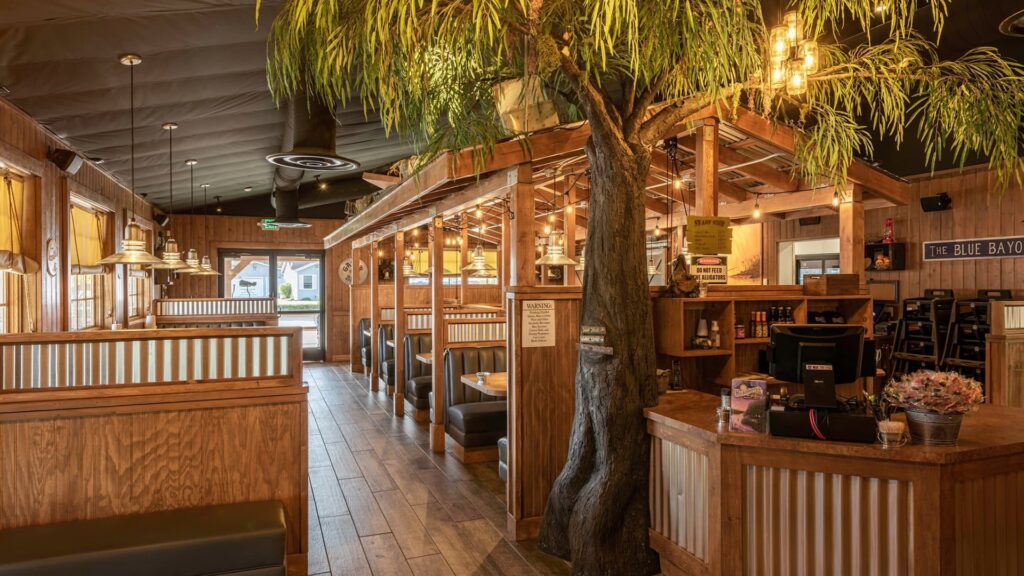
The Huckleberry’s restaurant franchise is not your average breakfast concept, and that becomes clear the moment you walk through the door. An indoor weeping willow glows with firefly lights, Zydeco drifts through the dining room, and a menu built on Louisiana bayou flavors with a California twist gives guests something they genuinely cannot find anywhere else. People do not just eat here — they linger, come back, and bring others with them. That kind of loyal, repeat traffic is exactly what makes this concept worth a serious look.
Huckleberry’s runs a single daytime shift, 7 a.m. to 3 p.m., which means no dinner service, no late nights, and no working through the weekend dinner rush. Heritage Restaurant Brands, the California-based multi-brand restaurant platform that acquired the concept in 2016, currently supports approximately 34 franchised locations across California, Nevada, and Texas, with more in development.
This review covers everything a serious candidate needs to evaluate the Huckleberry’s restaurant franchise before taking the next step.
This article is sponsored by Huckleberry’s Breakfast & Lunch and was created in partnership with the brand to provide accurate, compliance-safe information about its business model and franchise opportunity.
Nothing in this article should be considered legal, financial, or tax advice. Prospective franchisees should always review the most recent Franchise Disclosure Document (FDD) with qualified advisors before making an investment decision.
Key Facts at a Glance.
- Founded: 2008 in Pismo Beach, California; franchising under Heritage Restaurant Brands since 2016.
- Headquarters: San Luis Obispo, California.
- Unit count: Approximately 34 franchised locations as of December 31, 2025, with additional units in development across California, Oregon, and Texas.
- Business model: Single-shift, sit-down fast-casual hybrid; Louisiana-inspired breakfast and lunch in a bayou-themed dining room; typically 7 a.m. to 3 p.m.
- Owner profile snapshot: Multi-unit restaurant operators or experienced single-unit candidates with prior restaurant management or ownership background; financial partners can be paired with qualified restaurant operators.
- Training highlight: Six to eight weeks of on-site operations training plus up to 14 days of on-site opening support.
- Territory note: Franchisees receive a defined protected territory; specific boundaries and performance conditions are described in the franchise agreement.
Who Owns Huckleberry’s, and How Did the Brand Get Started?
Huckleberry’s Breakfast & Lunch was born in 2008 in Pismo Beach, California, with a simple but ambitious idea: create a breakfast and lunch experience so distinctive that guests would feel transported the moment they stepped inside. The founding vision drew its identity from the Louisiana bayou — the atmosphere, the music, the food — and layered it with California-influenced freshness to produce something that had no real equivalent in the breakfast and lunch category.
The dining room was designed from the start to be immersive and memorable. A dramatic indoor weeping willow, twinkling firefly lights, the faint sound of crickets, and a Zydeco playlist combine to create an environment that feels more like a mini-vacation than a meal stop. The menu followed that same philosophy, with signature dishes like Mardi Gras Beignets, Stacked Chicken and Waffles, Cajun Benedict, Fried Green Tomatoes, and N’awlins Sandwiches delivering bold Southern flavors that keep guests coming back.
In 2016, Heritage Restaurant Brands acquired the concept and built out the franchise infrastructure behind it. The platform brings multi-brand restaurant experience and disciplined systems around site selection, training, and operations that now support the growing Huckleberry’s network.
The brand’s momentum has drawn independent recognition. Nation’s Restaurant News ranked Huckleberry’s number 43 on its list of 100 emerging restaurant chains thriving in the United States, and Franchise Times named it a 2024 Fast and Serious winner.
How Much Does It Cost to Open a Huckleberry’s Restaurant Franchise?
Opening a Huckleberry’s restaurant franchise requires a meaningful full-service restaurant investment.
Current disclosure materials estimate the total investment for a single location at between $492,000 and $1,683,250, with the range driven primarily by real estate, construction scope, and local market conditions.
The table below breaks that range into its main components so candidates can begin building a realistic planning baseline.
Huckleberry’s Restaurant Franchise: Startup Costs & Fees.
| Type of Expenditure | Low* | High* |
|---|---|---|
| Initial Franchise Fee | $35,000 | $35,000 |
| Your Training Expenses | $15,000 | $55,000 |
| Lease & Utilities Deposits | $15,000 | $40,000 |
| Leasehold Improvements, Construction and/or Remodeling | $175,000 | $850,000 |
| Furniture, Fixtures and Equipment | $100,000 | $400,000 |
| Signage | $10,000 | $40,000 |
| Business Licenses and Permits | $15,000 | $17,000 |
| POS/Computer System | $7,000 | $16,250 |
| Initial Inventory | $20,000 | $30,000 |
| Professional Fees | $40,000 | $80,000 |
| Grand Opening Advertising | $5,000 | $10,000 |
| Insurance | $5,000 | $10,000 |
| Operating Expenses / Additional Funds – 3 months | $50,000 | $100,000 |
| TOTAL | $492,000 | $1,683,250 |
The biggest single cost driver is leasehold improvements, which reflects the full-service restaurant build-out required to deliver the brand’s distinctive bayou atmosphere. Candidates who secure second-generation restaurant spaces with existing kitchen infrastructure typically land closer to the lower end of that range.
For multi-unit development, the current disclosure materials note that the total investment for a minimum two-unit development agreement ranges from approximately $509,500 to $1,700,750.
Important context: These figures reflect startup and early operating needs only. They do not indicate financial performance or outcomes.
Ongoing Fees & System Contributions.
| Category | Amount* | Notes |
|---|---|---|
| Royalty Fee* | 6% of monthly Gross Volume* | Due on the 15th of each month for the prior month’s Gross Volume; payable to the franchisor. |
| Brand Fund Contribution* | Not currently assessed* | Franchisor reserves the right to establish a Brand Fund; if activated, contribution is a minimum percentage of Gross Volume, with increases not to exceed 1% annually. |
| Local Marketing & Advertising* | Not currently assessed as a fixed minimum* | Franchisor reserves the right to require a minimum percentage of Gross Volume; all advertising must be approved by the franchisor. |
| Transfer Fee* | $25,000* | Due upon an approved transfer; waived for transfers to an entity owned and controlled by the franchisee or upon death or disability. |
| Renewal Fee* | $10,000* | Due upon signing the then-current franchise agreement at renewal. |
| Non-Compliance Fee* | $500 per incident or per day* | Applied when franchisee is out of compliance with the franchise agreement or operations manual; increases not to exceed 5% annually. |
What Tends to Move the Total Up or Down?
The investment range is wide, and the factors that push a candidate toward the high or low end are mostly real estate and construction-driven. Understanding these early helps candidates plan more accurately.
Key cost drivers include:
- Real estate and lease terms: High-traffic dining corridors carry higher rents, larger deposits, and less favorable tenant-improvement allowances.
- Construction and build-out scope: Second-generation restaurant spaces with existing kitchen infrastructure significantly reduce leasehold improvement costs.
- Footprint size: Locations generally range from 3,000 to 5,000 square feet; larger footprints increase both build-out and equipment costs.
- Local labor and permitting: Markets with higher construction wages or complex permitting timelines can add meaningful cost and delay.
- Equipment sourcing: Whether equipment is new, refurbished, or inherited from a prior tenant affects the equipment line significantly.
- Working capital cushion: Owners who build a larger cash reserve for the first three months will sit toward the higher end of the estimate.
What Is Huckleberry’s Business Model, and What Do Day-to-Day Operations Look Like?
The Huckleberry’s restaurant franchise runs a single-shift, sit-down fast-casual model focused entirely on breakfast and lunch. The concept generates guest traffic through its immersive bayou-themed environment, a Southern-inspired menu with California influences, and community-driven hospitality that encourages repeat visits and word-of-mouth referrals.
Each location occupies roughly 3,000 to 5,000 square feet in a shopping center, retail strip, college-adjacent corridor, or urban storefront. Revenue flows from dine-in table service, takeout, approved third-party delivery, and where licensed, beer and wine sales. The daytime-only structure eliminates dinner service, late-night staffing complexity, and the operational fatigue that comes with running a restaurant through multiple day parts.
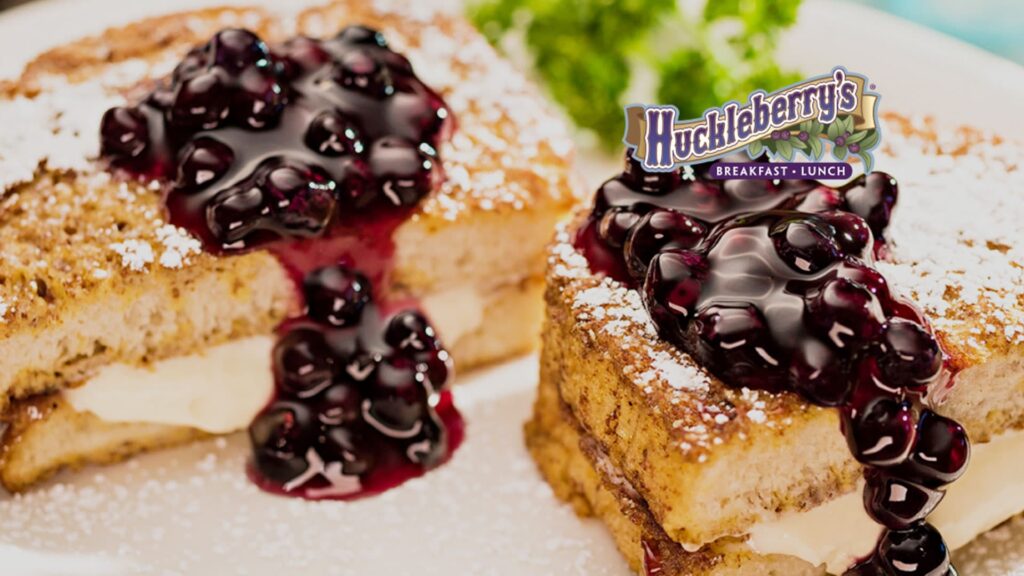
The guest experience anchors around the bayou atmosphere and a menu designed for both indulgence and repeat visits. Bottomless beverages like Huck’s Swamp Tea and Huckleberry Lemonade, comfort dishes that photograph well, and a dining room environment guests genuinely enjoy spending time in all contribute to the kind of local loyalty that sustains a neighborhood restaurant long-term.
What Does a Typical Day Look Like for an Owner-Operator?
A Huckleberry’s owner-operator day runs from pre-opening setup through early afternoon, with the entire operation wrapped and reset well before dinnertime. The role is floor-present and people-focused, particularly during the launch period and early months of operation.
Common daily responsibilities include:
- Staffing and team management: Hiring, scheduling, coaching, and holding kitchen and front-of-house staff accountable to service and food-quality standards every shift.
- Service delivery and quality checks: Walking the dining room, tasting dishes, checking plate presentation, and ensuring the bayou atmosphere elements are consistent and fully operational each morning.
- Sales and guest outreach: Greeting regulars by name, coaching servers on menu recommendations, and monitoring table turn efficiency during the breakfast and lunch rushes.
- Scheduling and logistics: Managing prep schedules, waste tracking, supply ordering, and vendor coordination to keep food costs and operational rhythm aligned with brand standards.
- Local marketing execution: Coordinating approved local marketing tactics including guerrilla outreach, social media, community sponsorships, and school programs within the brand’s provided frameworks.
- Administrative and reporting rhythms: Reviewing POS dashboards, managing payroll, and tracking location-level performance metrics.
What Training, Support, and Technology Does the Franchisor Provide?
Heritage Restaurant Brands provides a hands-on, field-based support system designed to carry franchisees through site selection, construction, opening, and into steady-state operations. The model is built around on-site instruction and real-restaurant training, which suits the complexity of running a full-service dining concept.
Support & Systems Overview.
| Support Area | Details |
|---|---|
| Initial Training | Six to eight weeks of on-site operations training at an existing Huckleberry’s location, plus one day of administrative training. Up to two individuals attend at no charge; travel and expenses are the franchisee’s responsibility. |
| Opening Support | Up to 14 days of on-site opening training, supervision, and assistance from a trained Heritage representative; franchisee covers trainer travel and lodging. |
| Ongoing Training | Up to five days per year of required ongoing training and national business meetings; on-site remedial training available upon request. |
| Field Support | Regular on-site brand visits by the operations team; phone and email access for operational questions throughout the year. |
| Manuals / SOPs | Fully integrated intranet tool housing recipes, procedures, individual position training materials, and operational guidelines. |
| Technology Platform | Required POS system; franchisor-provided eClub platform; internal systems fee may apply for portal and benchmarking tools. |
| Marketing Support | Guerrilla and local store marketing, social media guidance, digital marketing support, food photography and graphics, school award certificate programs, and a limited-time offering calendar. |
In practice, franchisees can expect:
- Hands-on kitchen and floor training at a live Huckleberry’s location before their own restaurant opens.
- A dedicated training team present during hiring week, training week, and opening week.
- Ongoing field visits from the Heritage operations team after the opening period ends.
- A centralized intranet library covering every position level and operational need.
- Marketing tools and templates at the system level, with location-specific customization support.
What Should You Confirm Before Investing in a Huckleberry’s Restaurant Franchise?
Due diligence is where a candidate moves from reviewing brand materials to making a grounded ownership decision. At a restaurant investment of this size, direct conversations with current and former franchisees are essential.
Key questions to prioritize include:
- How is the six-to-eight-week training structured, and what does it specifically cover?
- What does ongoing field support look like after the opening period in terms of cadence and format?
- What technology is currently required, and what are the expected ongoing costs?
- How are territories defined and what performance conditions affect protection?
- What are the renewal, transfer, and exit terms, and how have those been applied in practice?
- What assumptions drove the investment estimates, and how closely have recent openings tracked against those ranges?
- Is financial performance information available, and what does it cover?
- Which current and former franchisees are available to speak with, and in which markets?
How Do Territories, Real Estate, and Equipment Requirements Typically Work?
Huckleberry’s is a brick-and-mortar full-service restaurant, so territory definitions, real estate selection, and equipment decisions all carry real operational and financial weight. Each of these areas deserves careful review before signing.
What Real Estate Profile Is Typical?
A typical Huckleberry’s location is a leased retail or restaurant space in a high-traffic commercial area, such as a neighborhood shopping center, lifestyle center, retail strip, or urban storefront. Locations generally range from 3,000 to 5,000 square feet, built to the brand’s design and atmosphere specifications.
Because the concept depends on visibility, repeat foot traffic, and community presence, trade area characteristics matter as much as the specific space. Candidates should discuss preferred co-tenancy, parking, access, and demographic profiles with the franchisor’s site selection team early in the process. Heritage provides site selection guidelines and location approval as part of its support structure.
How Does Territory Protection Work?
Each Huckleberry’s franchisee receives a defined protected territory, meaning the franchisor agrees to limits on placing another same-brand location within that area, subject to specific conditions and exceptions described in the franchise agreement. A protected territory in franchise terms generally gives the franchisee confidence that the brand will not place a competing same-brand location inside their defined boundaries, within the stated rules.
During discovery, candidates should confirm:
- How territory boundaries are drawn and measured, whether by zip code, radius, or another method.
- Whether performance standards are tied to maintaining territorial protection over time.
- How alternative distribution channels such as delivery platforms, catering, or non-traditional venues are treated within and outside the territory.
What Equipment or Vehicles Are Commonly Required?
Huckleberry’s is a full-service restaurant concept, so the equipment requirements are consistent with a commercial kitchen and full dining room operation. Core requirements typically include:
- Commercial kitchen equipment including fryers, griddles, prep stations, and refrigeration units.
- Front-of-house furniture, fixtures, and branded décor elements that deliver the bayou atmosphere guests expect.
- A franchisor-approved point-of-sale system for sales reporting and operations management.
- Interior and exterior signage meeting brand design specifications.
- Technology hardware supporting the eClub platform and any required internal systems.
Because some equipment details depend on the specific space, build-out scope, and local vendor availability, candidates should request the full current equipment list during discovery and ask about approved suppliers, replacement expectations, and any optional upgrades recommended for higher-volume locations.
Who Is the Ideal Huckleberry’s Owner, and What Time Commitment Is Typical?
The ideal Huckleberry’s restaurant franchise owner is an experienced restaurant operator or multi-unit developer who brings genuine people leadership, operational discipline, and a community-minded approach to running a local dining destination. The brand is not designed for absentee ownership, particularly in the early stages, and it shows best when the owner is present, engaged, and invested in the guest experience.
The franchisor has also shown willingness to pair qualified restaurant operators with financial partners for candidates who bring strong operational credentials but need capital support, which expands the pool of viable candidates beyond those who meet the full investment threshold independently.
Key fit factors include:
- Restaurant or multi-unit operations experience: Prior experience running shifts, managing teams, and controlling food and labor costs is strongly preferred and often expected.
- Leadership and team development: Owners need to recruit, train, and retain kitchen and front-of-house staff while maintaining the service culture the brand is built on.
- Community presence and local marketing comfort: Huckleberry’s thrives on neighborhood loyalty, which requires owners who genuinely engage with their local community through events, partnerships, and outreach.
- Comfort with systems and standards: The concept runs on defined recipes, operating procedures, and brand standards; owners need to respect and execute those consistently.
- Realistic time commitment: This is a full-time owner-operator model, particularly during the opening period and first year of operations; semi-absentee structures require careful planning and a strong management team.
- Financial qualifications: Candidates should review current liquidity and net worth requirements with the franchisor directly, as these are confirmed during the qualification process.
How Does Huckleberry’s Compare to Similar Franchise Options?
The Huckleberry’s restaurant franchise occupies a distinctive position within the breakfast and lunch franchise category. It is not a quick-service grab-and-go concept, nor is it a traditional full-service brunch restaurant. It sits in a deliberate middle ground: sit-down hospitality, a chef-inspired menu, and an immersive environment, all delivered within a single daytime shift that eliminates the complexity of dinner operations.
Relative to similar franchise options in the breakfast and lunch space, Huckleberry’s stands out in several ways:
- Core concept focus: A fully themed, immersive dining experience rather than a utilitarian breakfast format; the bayou environment is a genuine differentiator that competitors in the category do not replicate.
- Operational complexity: Full-service table service with a commercial kitchen and chef-inspired menu requires more operational depth than simpler fast-casual formats, which is why restaurant experience is strongly preferred.
- Service delivery: Entirely dine-in and daytime focused, with takeout and approved delivery as secondary channels; not mobile, not home-based, not B2B.
- Territory approach: Defined protected territories with specific boundary and performance conditions, rather than an open-market or population-based system.
- Lifestyle structure: The 7 a.m. to 3 p.m. single-shift model is a meaningful differentiator for operators who want restaurant ownership without giving up their evenings, a feature that few competitors in the full-service dining category can match.
- Support depth: On-site training, opening week presence, field visits, and a marketing toolkit that goes well beyond what most independent restaurant concepts provide.
FAQ About the Huckleberry’s Restaurant Franchise.
What does it cost to get started with a Huckleberry’s franchise?
The total initial investment for a single location is currently estimated between $492,000 and $1,683,250, including the franchise fee, build-out, equipment, and three months of additional operating funds. Real estate and construction variability are the biggest drivers of where a candidate lands within that range.
Do I have to have restaurant experience to be considered?
Restaurant experience is strongly preferred, particularly for single-unit candidates. For candidates with strong capital but limited operations background, the franchisor has shown willingness to help source and pair qualified restaurant operators as managing partners.
What are the hours and will I have my evenings free?
Huckleberry’s locations generally operate from 7 a.m. to 3 p.m. with no dinner service. That single daytime shift is one of the brand’s most distinct features and a primary draw for operators who want a serious restaurant business without giving up their evenings.
Will I have a protected area for my restaurant?
Each franchisee receives a defined protected territory outlined in the franchise agreement, which places limits on where additional same-brand locations can be placed nearby. Candidates should confirm boundary mapping, performance requirements, and any channel exceptions during their discovery process.
Can I see financial performance numbers before I decide?
The franchisor may provide financial performance information in Item 19 of the FDD; consult the document with a qualified advisor.
Is the Huckleberry’s Restaurant Franchise the Right Fit for You?
The Huckleberry’s restaurant franchise is a strong candidate for operators who want a differentiated, community-rooted dining concept with a lifestyle-friendly schedule and a clear path to multi-unit growth. It is not the right fit for candidates looking for a passive investment, a simple operation, or a concept with minimal staffing complexity.
It may be a good fit if you:
- Have prior restaurant management, ownership, or multi-unit operations experience.
- Want to build a local dining destination with genuine community loyalty and repeat traffic.
- Value a single daytime shift that preserves evenings and personal time.
- Are comfortable leading kitchen and front-of-house teams to consistent service and food-quality standards.
- Are interested in multi-unit development and want a concept with territory availability in growing markets.
- Enjoy an immersive, experience-driven brand rather than a generic or utilitarian food concept.
You may want to be cautious if you:
- Have no prior restaurant or food-service management experience and are unwilling to partner with an experienced operator.
- Prefer a lower-complexity, lower-investment entry point into franchising.
- Want a passive or semi-absentee model from day one without building a strong management team first.
- Are uncomfortable with the staffing, food cost, and operational demands of a full-service restaurant environment.
- Are seeking guarantees around financial outcomes rather than a disciplined, due-diligence-based investment decision.
Good franchise decisions are rarely made in a hurry. If Huckleberry’s feels like a strong fit, the next step is to dig deeper — talk to current owners, review the numbers with your advisors, and compare your options with the same discipline you would bring to running the business itself.