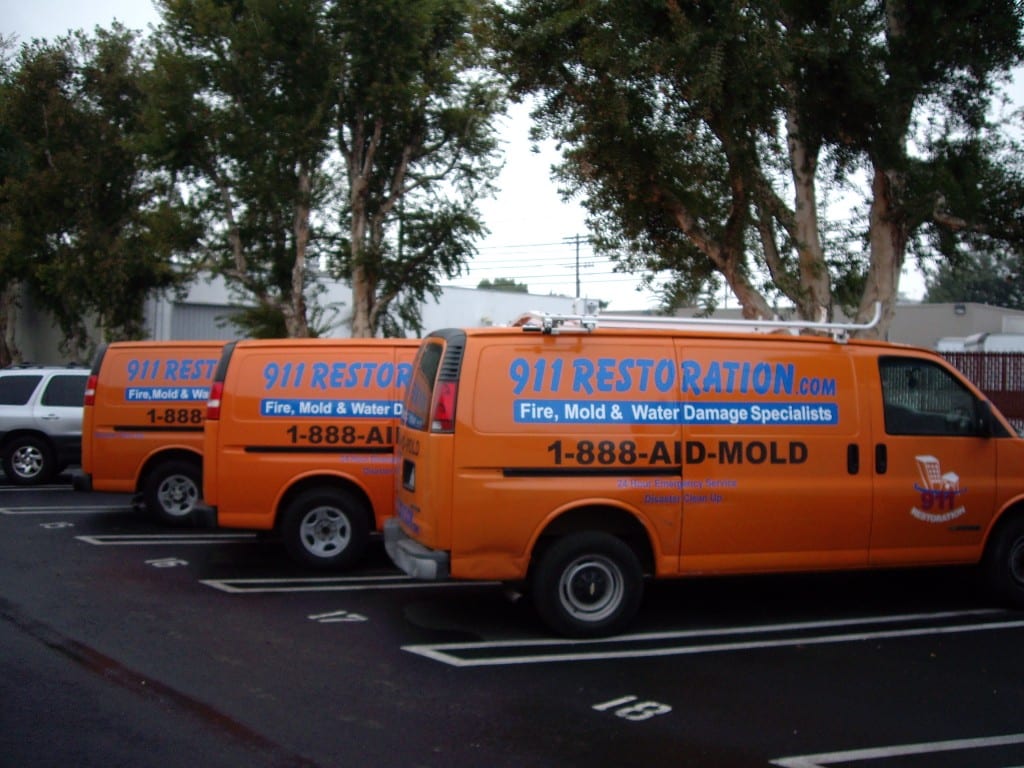
A 911 Restoration franchise is an emergency property restoration business serving residential and commercial customers after water, fire, mold and related damage. According to the 2026 Franchise Disclosure Document (FDD), a traditional or conversion franchise has an estimated initial investment of $167,700 to $334,000, including a $55,000 initial franchise fee. A separate micro-market format has a lower disclosed investment range. This guide explains startup costs, ongoing fees, training and the responsibilities of ownership, not projected earnings.
About this article. 911 Restoration is a member of the Franchise Brokers Association. FBA publishes reviews of member brands as part of its membership program, and FBA and its brokers may receive a commission from the franchisor if a candidate FBA works with goes on to purchase a franchise. This article was researched and written by FBA from the brand’s current Franchise Disclosure Document and FBA’s own franchise database. The brand did not write, review, or approve it before publication.
Nothing in this article should be considered legal, financial, or tax advice. Prospective franchisees should always review the most recent Franchise Disclosure Document (FDD) with qualified advisors before making an investment decision.
What is a 911 Restoration franchise?
911 Restoration provides emergency property restoration services following water damage, fire and smoke damage, mold and related events. FBA’s member listing describes an owner-led business in which franchisees oversee employees, coordinate projects and develop local business relationships.
The work involves more than responding to the initial emergency. Depending on the services authorized, staffing, licensing and project requirements, a branch may provide mitigation, cleanup and subsequent repair services. Offering additional services involves additional responsibilities and costs; it should not be interpreted as a promise of higher revenue or profitability.
The brand’s member materials emphasize team leadership rather than passive ownership or a business operated solely by an individual technician.
How does a 911 Restoration branch get its work?
FBA’s member listing describes three channels for developing business: local referral relationships, franchisor-supported marketing and national account relationships.
Owners and their business-development staff cultivate relationships with:
- Insurance professionals involved in property claims.
- Plumbers and other trades who encounter property damage.
- Property managers responsible for residential or commercial buildings.
- Other local professionals who may need restoration services.
The listing also describes in-house support for websites, search engine optimization, paid advertising, content resources and marketing reporting.
The FDD requires participation in the franchisor’s dispatch program and establishes local advertising obligations. National account work is subject to program requirements, and the franchisor expressly does not guarantee any volume of jobs or revenue from that program. Marketing support and referral development should therefore be evaluated as business resources, not guaranteed sources of customers.
What does a 911 Restoration owner actually do?
According to FBA’s member listing, the owner’s role centers on managing people, overseeing projects and developing relationships. Responsibilities may include:
- Reviewing active jobs with project managers and technicians.
- Monitoring estimating, approvals and project documentation.
- Overseeing customer communication.
- Hiring, supervising and coaching employees.
- Developing referral relationships.
- Reviewing expenses, financial reports and operating performance.
An illustrative morning might begin with a team meeting about active projects, equipment needs and customer updates. Later, the owner might meet a property manager, review an estimate or interview a technician. This is an example of the responsibilities described in the listing, not a report of a particular franchisee’s day.
The model emphasizes leadership, but that does not remove the owner from operating responsibilities. Candidates should clarify staffing expectations, after-hours coverage and the owner’s involvement during startup before signing.
How much does a 911 Restoration franchise cost?
The 2026 FDD estimates an initial investment of $167,700 to $334,000 for a traditional or conversion franchise. It separately lists $135,200 to $296,000 for a micro-market franchise. These are different formats, not interchangeable investment options for every candidate or market.
| Franchise format | Initial franchise fee | Estimated total initial investment |
|---|---|---|
| Traditional or conversion | $55,000 | $167,700 to $334,000 |
| Micro-market | $39,000 | $135,200 to $296,000 |
Figures are from the 2026 FDD investment tables. Each total includes its initial franchise fee; the fee should not be added again. Availability, eligibility and applicable terms must be confirmed with the franchisor.
For the most accurate and current information, review the latest Franchise Disclosure Document (FDD) for 911 Restoration. The financial figures presented here are historical results from franchised businesses as disclosed in Item 7 and Item 19 of the 2026 FDD.
Important context: These figures reflect startup and early operating needs only. They do not indicate financial performance or outcomes.
What does the traditional investment estimate include?
Selected components of the traditional or conversion franchise estimate are:
| Startup expense | Estimated amount |
|---|---|
| Initial franchise fee | $55,000 |
| Equipment, furnishings and fixtures | $35,000 to $60,000 |
| Service vehicle | $1,500 to $60,000 |
| Business launch fee | $10,000 |
| Initial training fee | $2,500 to $3,500 |
| Additional funds for three to six months | $50,000 to $100,000 |
These are selected components, not the complete investment table. Other expenses include setup fees, signage, supplies, insurance, professional fees and location-related costs. Review the full table and its footnotes before preparing a budget.
For the most accurate and current information, review the latest Franchise Disclosure Document (FDD) for 911 Restoration. The financial figures presented here are historical results from franchised businesses as disclosed in Item 7 and Item 19 of the 2026 FDD.
Important context: These figures reflect startup and early operating needs only. They do not indicate financial performance or outcomes.
The additional-funds allowance is especially important. The FDD explains that new businesses may experience negative cash flow and that the disclosed allowance does not assure that additional working capital will be unnecessary.
Is there a veteran discount?
The FDD states that the franchisor may reduce the initial franchise fee by 25% for a qualifying U.S. Armed Services veteran’s first franchised business, subject to eligibility and ownership requirements. Confirm the available discount and its application before relying on it in your budget.
Startup estimates are not historical financial-performance results, and they do not indicate profit, owner income or investment returns. Actual costs vary.
To explore financing scenarios, use FBA’s franchise funding calculator alongside a budget reviewed by qualified advisors.
What are 911 Restoration’s ongoing fees?
For a traditional franchise, the FDD establishes base royalty rates of 9% of gross revenue from restoration services and 3% from non-restoration services, with minimum royalties beginning in month seven after signing. Conditional incentives and different provisions for other franchise arrangements also apply.
| Ongoing obligation | Disclosed amount or basis |
|---|---|
| Restoration-services royalty | Base rate of 9% of gross revenue, subject to minimums and applicable incentive conditions |
| Non-restoration-services royalty | 3% of gross revenue, subject to applicable minimums |
| Local advertising | Minimum of $3,500 monthly |
| National advertising fund | First six months after signing: 1% of collected gross revenue; beginning in month seven: the greater of 1% of gross revenue or $100 monthly |
| Technology fee | $495 monthly for the first location; different pricing applies to additional locations |
| Dispatch fee | $195 monthly for the first business; different pricing applies to additional businesses |
| National account program fee | 5% of applicable national account revenue, subject to disclosed exclusions |
This table summarizes selected obligations, not every payment required under the agreement. Contribution caps, adjustment provisions, service definitions, incentive conditions and other qualifications apply. Review the current FDD and franchise agreement for the complete terms.
For the most accurate and current information, review the latest Franchise Disclosure Document (FDD) for 911 Restoration. The financial figures presented here are historical results from franchised businesses as disclosed in Item 7 and Item 19 of the 2026 FDD.
How do the minimum royalties work?
For a new traditional franchise, the disclosed monthly minimum schedule begins in month seven after signing:
| Months after signing | Monthly minimum royalty |
|---|---|
| 7–12 | $750 |
| 13–24 | $1,500 |
| 25–36 | $2,000 |
| 37–48 | $2,500 |
| 49–60 and thereafter | $3,500 |
The royalty is the greater of the applicable percentage-based calculation or the minimum, not both added together. Micro-market, qualifying conversion and renewal arrangements have different provisions.
For the most accurate and current information, review the latest Franchise Disclosure Document (FDD) for 911 Restoration. The financial figures presented here are historical results from franchised businesses as disclosed in Item 7 and Item 19 of the 2026 FDD.
The timing matters: the schedule is measured from signing, not simply from the first customer job.
Local marketing also involves more than the advertising floor. The FDD requires an approved local marketer after the first three months the business is open, with that cost separate from the $3,500 monthly advertising minimum. Include this staffing obligation when reviewing operating expenses.
What do 911 Restoration franchisees actually earn?
The 2026 FDD includes a financial-performance disclosure in Item 19. This article reproduces its revenue tables as disclosed. It does not estimate profit, owner income or future returns.
The disclosure presents historical gross-revenue information for 196 franchisee-owned territories owned and operated by 65 franchisee owners that were open from January 1 to December 31, 2025. It excludes businesses that opened, closed or transferred during the reporting period, businesses without adequate financial reporting, and company-owned outlets. For operators holding multiple territories, the disclosure combines revenue across those territories.
Those distinctions matter. An operator’s combined results should not be presented as the performance of one territory or one physical branch.
Across all 65 operators, 2025 gross revenue had a median of $567,770.98 and an average of $941,752.74. The average sits well above the median because a small number of large multi-territory operators pull it up: 18 of the 65 operators (27.69%) exceeded it, and the highest reported $7,348,101.54. The lowest reported $112,059.39.
| Group (by revenue) | Owners | Average | Median | Lowest | Highest | Owners above group average |
|---|---|---|---|---|---|---|
| Top 25% | 16 | $2,432,297.76 | $1,359,506.95 | $1,024,508.56 | $7,348,101.54 | 4 (25%) |
| Top 50% | 33 | $1,563,318.44 | $999,157.10 | $567,770.98 | $7,348,101.54 | 6 (18.18%) |
| Top 75% | 49 | $995,844.73 | $688,134.14 | $299,212.26 | $7,348,101.54 | 18 (36.73%) |
| Bottom 75% | 49 | $455,044.17 | $475,648.57 | $112,059.39 | $999,157.10 | 26 (53.06%) |
| Bottom 50% | 32 | $300,763.12 | $292,310.96 | $112,059.39 | $562,076.70 | 15 (46.87%) |
| Bottom 25% | 16 | $161,973.05 | $149,351.16 | $112,059.39 | $285,409.65 | 7 (43.75%) |
| All owners | 65 | $941,752.74 | $567,770.98 | $112,059.39 | $7,348,101.54 | 18 (27.69%) |
Figures from 911 Restoration’s 2026 FDD, Item 19, Table 1, as disclosed. Each figure is one operator’s combined gross revenue across all of its territories. The groups overlap: the top 50% includes the top 25%. The last column counts operators above their own group’s average, so a lower group can show a higher percentage than a higher one.
For the most accurate and current information, review the latest Franchise Disclosure Document (FDD) for 911 Restoration. The financial figures presented here are historical results from franchised businesses as disclosed in Item 7 and Item 19 of the 2026 FDD.
Item 19 also reports how many territories the operators in each group hold:
| Group (by revenue) | Owners | Territories | Average per owner | Most held | Fewest held | Median per owner | Owners above group average |
|---|---|---|---|---|---|---|---|
| Top 25% | 16 | 61 | 3.81 | 16 | 1 | 2 | 5 |
| Top 50% | 33 | 108 | 3.27 | 16 | 1 | 2 | 11 |
| Top 75% | 49 | 162 | 3.31 | 16 | 1 | 2 | 17 |
| Bottom 75% | 49 | 135 | 2.76 | 12 | 1 | 2 | 18 |
| Bottom 50% | 32 | 88 | 2.75 | 12 | 1 | 2 | 10 |
| Bottom 25% | 16 | 34 | 2.13 | 7 | 1 | 2 | 3 |
| All owners | 65 | 196 | 3.02 | 16 | 1 | 2 | 19 |
Territory counts per operator from Item 19, Table 1, as disclosed. Most operators hold more than one territory, which is why the revenue figures above should not be read as the result of one territory.
Operators with a single territory are the closest comparison for a new owner buying one territory. The 16 single-territory operators had a median of $516,902.11 and an average of $493,579.90, from $116,544.41 to $1,188,874.29.
| Group (by revenue) | Owners | Average | Median | Lowest | Highest | Owners above group average |
|---|---|---|---|---|---|---|
| Top 25% | 4 | $959,633.17 | $981,074.86 | $687,508.67 | $1,188,874.29 | 2 (50%) |
| Top 50% | 8 | $757,637.27 | $627,639.83 | $542,591.08 | $1,188,874.29 | 3 (37.5%) |
| Top 75% | 12 | $615,961.21 | $556,101.71 | $197,349.28 | $1,188,874.29 | 4 (33.33%) |
| Bottom 75% | 12 | $338,228.81 | $320,936.97 | $116,544.41 | $567,770.98 | 6 (50%) |
| Bottom 50% | 8 | $229,522.53 | $168,775.56 | $116,544.41 | $491,213.14 | 3 (37.5%) |
| Bottom 25% | 4 | $126,435.98 | $124,498.83 | $116,544.41 | $140,201.83 | 2 (50%) |
| All single-territory owners | 16 | $493,579.90 | $516,902.11 | $116,544.41 | $1,188,874.29 | 9 (56.25%) |
Figures from Item 19, Table 3, as disclosed. The last column counts operators above their own group’s average.
For the most accurate and current information, review the latest Franchise Disclosure Document (FDD) for 911 Restoration. The financial figures presented here are historical results from franchised businesses as disclosed in Item 7 and Item 19 of the 2026 FDD.
The 49 operators with two or more territories reported higher combined revenue, with a median of $638,456.86 and an average of $1,088,094.89:
| Group (by revenue) | Owners | Average | Median | Lowest | Highest | Owners above group average |
|---|---|---|---|---|---|---|
| Top 25% | 12 | $2,873,149.35 | $1,703,130.17 | $1,210,822.33 | $7,348,101.54 | 4 (33.33%) |
| Top 50% | 24 | $1,863,951.84 | $1,159,975.29 | $658,122.58 | $7,348,101.54 | 6 (25%) |
| Top 75% | 36 | $1,410,948.56 | $841,943.03 | $330,916.28 | $7,348,101.54 | 7 (19.44%) |
| Bottom 75% | 37 | $509,158.32 | $485,682.29 | $112,059.39 | $1,109,128.24 | 16 (43.24%) |
| Bottom 50% | 25 | $343,272.23 | $315,479.56 | $112,059.39 | $638,456.86 | 11 (44%) |
| Bottom 25% | 13 | $194,038.59 | $175,126.58 | $112,059.39 | $315,479.56 | 5 (38.46%) |
| All multi-territory owners | 49 | $1,088,094.89 | $638,456.86 | $112,059.39 | $7,348,101.54 | 14 (28.57%) |
Figures from Item 19, Table 4, as disclosed. Each figure combines all of an operator’s territories. The last column counts operators above their own group’s average.
For the most accurate and current information, review the latest Franchise Disclosure Document (FDD) for 911 Restoration. The financial figures presented here are historical results from franchised businesses as disclosed in Item 7 and Item 19 of the 2026 FDD.
The franchisor’s qualifier, as it appears in Item 19: “Some outlets have sold or earned this amount. Your individual results may differ. There is no assurance that you will sell or earn as much.”
The FDD also states that the franchisor has not audited or independently verified the submitted data. Its definition of gross revenue concerns fees received, subject to specified exclusions, not simply the total amount invoiced.
Gross revenue is not profit, owner compensation or available cash after expenses. Read the complete disclosure, its definitions and its qualifications with qualified advisors rather than treating selected figures as an expectation for a new business.
Item 19 also reports average and median job size by job type (water, fire, mold and reconstruction) for each operator group, in Table 2, which this article does not reproduce. Read Item 7 for the investment, Item 19 for the full representations and their notes, and Item 20 with its list of current and former franchisees, then speak with owners whose markets look like yours.
How big is the 911 Restoration system?
The FDD reports 329 franchised outlets at the end of 2025, compared with 326 at the beginning of that year, and separately reports four company-owned outlets. Its franchised-outlet status table records 11 openings, two terminations, one non-renewal and five outlets that ceased operations for other reasons during 2025.
These categories should remain distinct. “Ceased operations for other reasons” is the table’s classification; it should not automatically be treated as a finding about why a business closed.
Outlet, territory, branch and owner counts are not necessarily interchangeable. Ask the franchisor how each is defined and how many operating branches and individual owners the reported outlets represent.
The FDD’s system-wide outlet summary also contains an apparent arithmetic inconsistency in its combined 2025 total. For that reason, this article reports the franchised and company-owned counts separately rather than presenting a combined figure.
Review the litigation disclosures with a franchise attorney as part of the same due-diligence process, and speak with current and former franchisees.
What training and support does 911 Restoration provide?
FBA’s member listing describes an initial onboarding program with virtual instruction followed by hands-on training in a controlled flood-house environment.
The listed subjects include operations, estimating, customer management, marketing, business development and restoration procedures. However, candidates should not assume that the listing’s two-week description represents every training and certification requirement.
The FDD provides a broader training schedule covering classroom and on-the-job instruction in areas such as safety, equipment, water restoration, mold remediation and fire and smoke restoration. Confirm the current calendar, required attendees, locations and prerequisites directly with the franchisor.
According to the member listing, additional support may include:
- One-on-one business coaching.
- Peer groups, panels and roundtables.
- Business-development and CRM training.
- Online marketing instruction.
- Field visits to established operators.
- Regional meetings and annual gatherings.
These descriptions explain the support promoted through the listing. The FDD and agreement establish the franchisor’s contractual obligations, applicable fees and conditions.
Licensing and certification requirements also need separate attention. The FDD identifies required staff credentials and places responsibility for applicable licenses and permits on the franchisee. Do not assume initial onboarding alone satisfies every requirement for opening or providing each service.
For help understanding franchise documents, FBA’s free franchise education webinar and FranPath Live sessions provide additional educational resources.
Does a 911 Restoration franchise have an exclusive territory?
The 2026 FDD expressly states that franchisees do not receive an exclusive territory. It describes restrictions on other franchisees directly soliciting customers within a designated territory, but also identifies exceptions and reserved rights involving alternative distribution channels, national accounts and catastrophe-related work.
This is an important distinction from the “protected, exclusive territories” wording in some member-listing materials.
Before committing, ask a franchise attorney to review:
- The territory’s boundaries.
- Restrictions on direct solicitation.
- Circumstances in which another operator may accept work inside the territory.
- National account and dispatch policies.
- The franchisor’s reserved rights.
- Potential boundary changes at renewal.
A designated territory should not be interpreted as protection from every form of competition.
Who is a 911 Restoration franchise right for?
The brand’s member materials describe an involved owner who can lead employees, oversee projects and build business relationships. The model may be worth exploring for candidates with experience in operations, field services, construction, management or relationship-based sales.
Useful questions for evaluating your own fit include:
- Are you comfortable supervising employees and coordinating urgent work?
- Can you manage documentation, estimates and customer communication?
- Are you willing to develop referral relationships consistently?
- Can you fund startup requirements and ongoing obligations without assuming an immediate income?
- Are you prepared to understand insurance-related work and payment processes?
- Do you want an operating leadership role rather than a passive investment?
The model may be less suitable for someone seeking a solo-technician business, minimal involvement or a business whose customer needs always fit regular office hours.
FBA’s Zorakle owner-fit assessment and a conversation with a franchise consultant can support a broader discussion of ownership preferences. Neither replaces financial, legal or operational due diligence.
What should you ask before buying a 911 Restoration franchise?
Before signing, review the current FDD and proposed agreement with qualified advisors and speak with current and former owners.
Focus on questions such as:
- Which format is being offered? Confirm whether the proposal is traditional, conversion or micro-market and which investment assumptions apply.
- What will the business need beyond the franchise fee? Review equipment, staffing, insurance, software, marketing, certifications and working capital.
- When do fees and minimums begin? Distinguish obligations measured from signing from those triggered by opening.
- Which royalty incentives are available? Ask for eligibility requirements, ongoing conditions and circumstances that end a discount.
- What does the territory actually protect? Review exceptions, national account policies and the franchisor’s reserved rights.
- What training and credentials are required? Obtain a written explanation of required courses, attendees, certifications and associated costs.
- How are insurance-related jobs administered? Ask about documentation, collections, disputed charges and responsibility for unpaid amounts.
- What do departures from the system reveal? Discuss terminations, non-renewals and ceased operations with the franchisor and former owners.
- What does the financial-performance disclosure actually measure? Review the population, period, exclusions, multi-territory reporting and expense limitations without assuming that historical results predict your outcome.
911 Restoration franchise FAQ
How much does it cost to open a 911 Restoration franchise?
The 2026 FDD estimates $167,700 to $334,000 for a traditional or conversion franchise, including a $55,000 initial franchise fee. It separately estimates $135,200 to $296,000 for a micro-market franchise, including a $39,000 initial fee. Actual costs and format availability vary.
What is the 911 Restoration royalty?
For a traditional franchise, the base royalty is 9% of gross revenue from restoration services and 3% from non-restoration services. Minimum royalties begin in month seven after signing. Conditional incentives and different provisions for other arrangements apply.
Does 911 Restoration disclose franchisee earnings?
Yes. Item 19 of the 2026 FDD reports 2025 gross revenue for 65 franchisee owners operating 196 territories, combined per owner: a median of $567,770.98 and an average of $941,752.74. The 16 owners with a single territory had a median of $516,902.11. Gross revenue is not profit or owner take-home pay.
Do I need restoration experience to own a 911 Restoration franchise?
FBA’s member listing states that prior industry experience is not required and emphasizes leadership and operational skills. Candidates must still satisfy the franchisor’s qualification requirements and ensure the business has the required training, credentials and licenses.
Is 911 Restoration a passive franchise?
The brand’s member materials describe an involved, owner-led model, not passive ownership. Owners are expected to oversee people, projects and business development, especially during startup.
Does 911 Restoration offer exclusive territories?
No. The 2026 FDD states that the territory is not exclusive. It includes certain solicitation restrictions alongside exceptions and rights reserved by the franchisor. Review the full territory provisions rather than relying on a marketing description.
Ready to take the next step?
Ready to take the next step? The Franchise Brokers Association connects aspiring owners with the guidance, tools, and franchise options they need to make a confident, informed decision. Whether you are still exploring or ready to move forward, explore franchise opportunities with the support of an experienced FBA consultant.
Source notes and link list
- 911 Restoration, 2026 Franchise Disclosure Document, issued June 11, 2026. Accessed October 2026. Items 5, 6, 7, 11, 12, 19 and 20, and the Franchise Agreement.
- FBA member listing for 911 Restoration (franchisor-supplied brand profile). Accessed October 2026. Business model, owner role, lead-generation channels, onboarding and ongoing support.
- Federal Trade Commission, A Consumer’s Guide to Buying a Franchise, https://www.bulkorder.ftc.gov/publications/consumers-guide-buying-franchise. Accessed October 2026. General franchise due-diligence guidance.