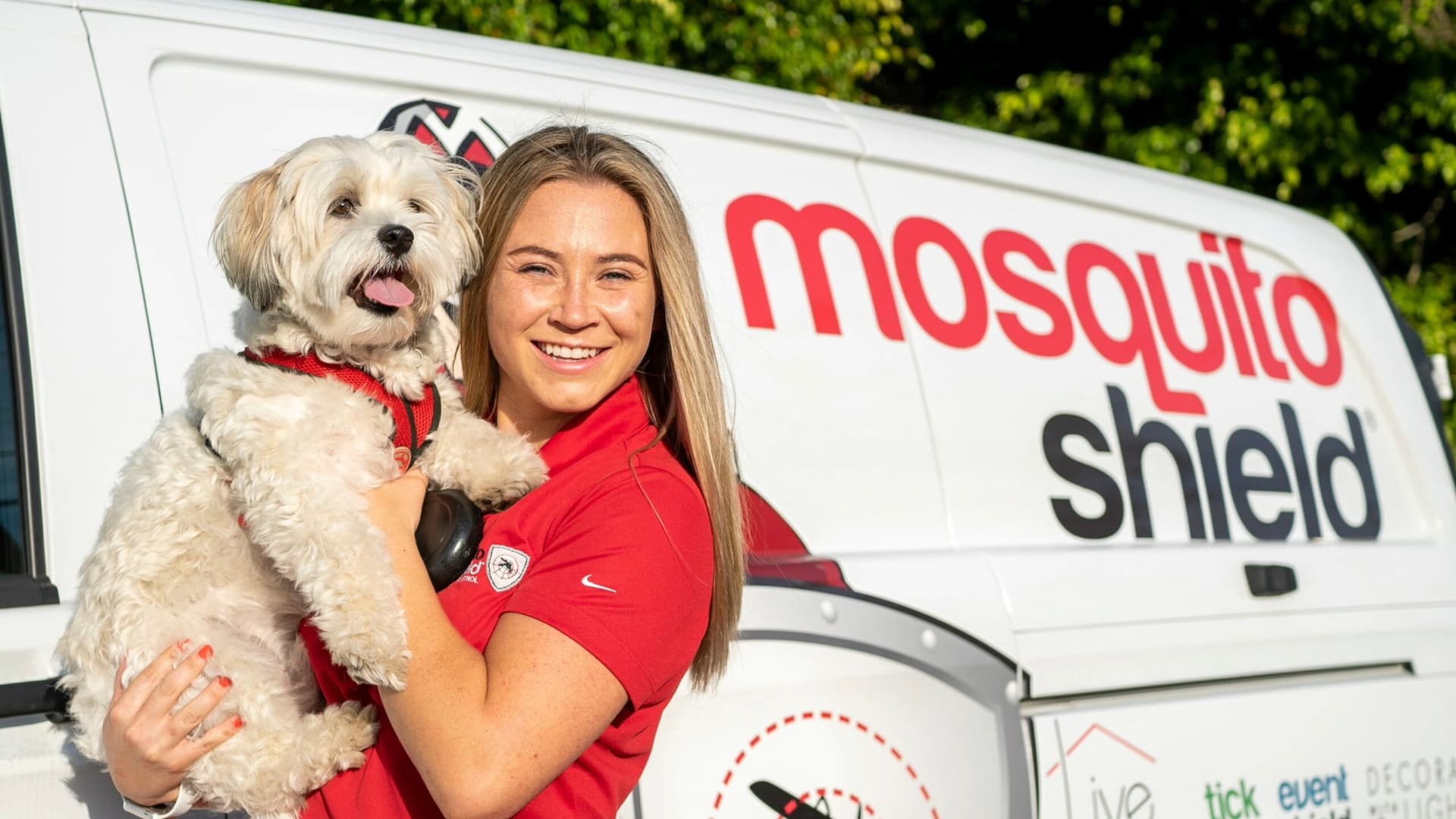
A Mosquito Shield franchise is a mosquito and tick control business that can operate from an approved home base. According to its 2026 Franchise Disclosure Document (FDD), the estimated initial investment for one territory is $120,525 to $162,420, including a $54,500 initial franchise fee. This guide covers startup costs, ongoing obligations, seasonal operations, owner fit, and recent changes in the franchise system.
About this article. Mosquito Shield is a member of the Franchise Brokers Association. FBA publishes reviews of member brands as part of its membership program, and FBA and its brokers may receive a commission from the franchisor if a candidate FBA works with goes on to purchase a franchise. This article was researched and written by FBA from the brand’s current Franchise Disclosure Document and FBA’s own franchise database. The brand did not write, review, or approve it before publication.
Nothing in this article should be considered legal, financial, or tax advice. Prospective franchisees should always review the most recent Franchise Disclosure Document (FDD) with qualified advisors before making an investment decision.
What is a Mosquito Shield franchise?
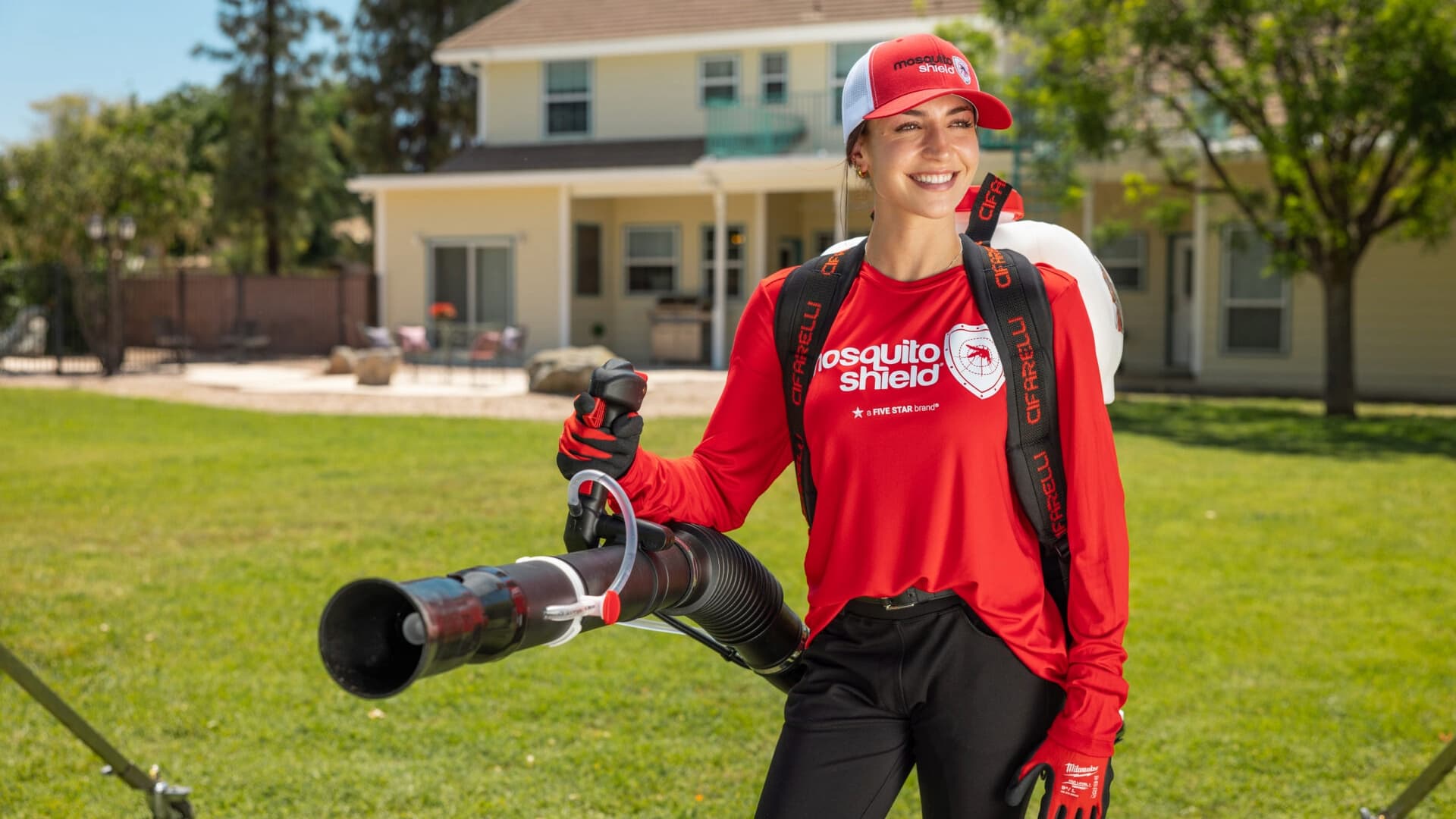
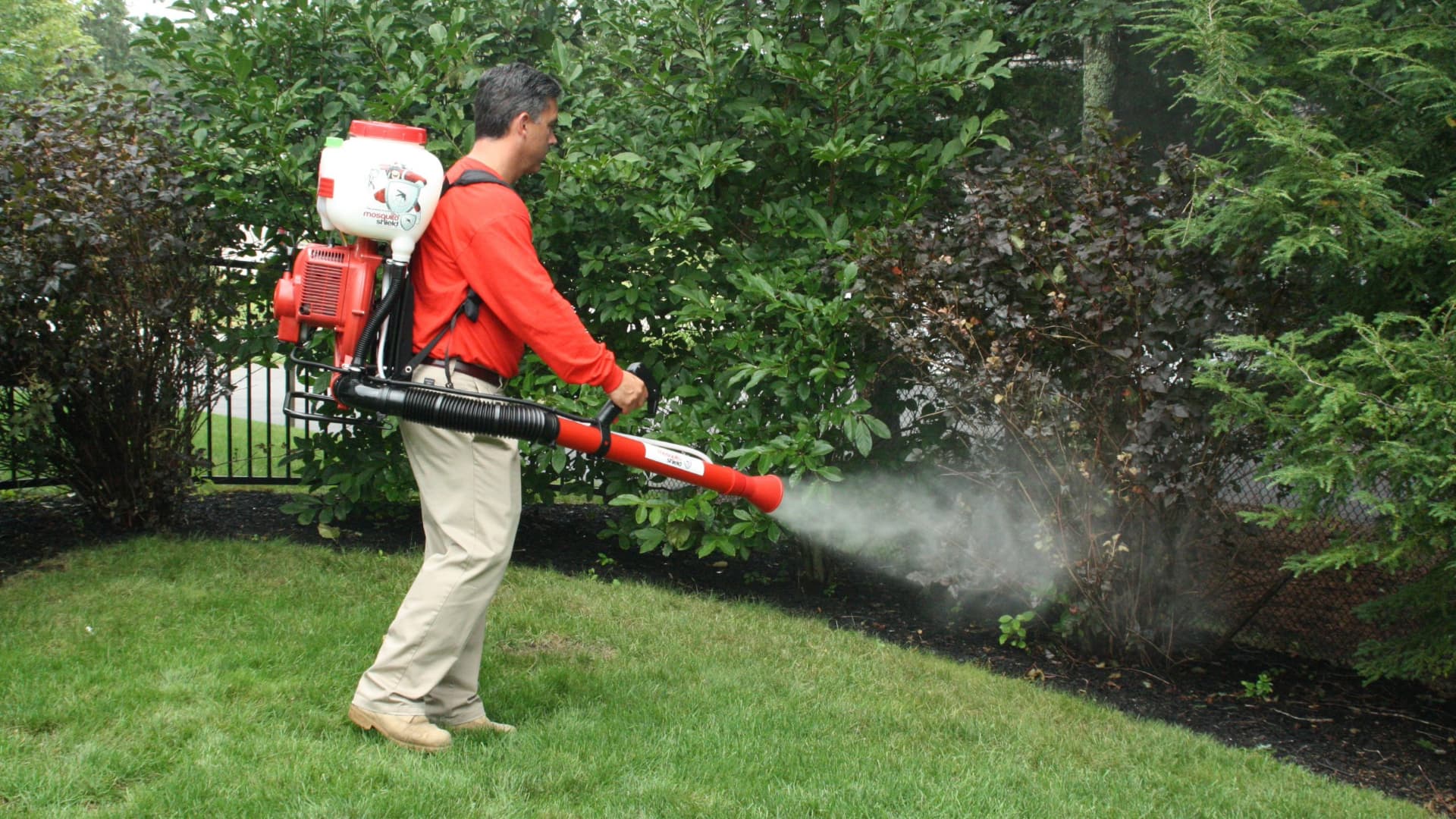
Mosquito Shield franchisees provide mosquito, tick, flea, and other approved pest control services. Although the brand’s members-site description emphasizes residential yards, the FDD also permits services for commercial customers and municipalities. Technicians apply approved products at customer properties using specialized spray equipment.
According to FBA’s members-site materials, additional services include:
- Tick Shield for tick control.
- Event Shield for one-time treatments before special events.
- Perimeter Shield for spiders, ants, and other pests.
The brand’s history dates to 2001, and the FDD states that it began offering franchises in January 2013. FBA’s brand materials report that Mosquito Shield became part of Five Star Franchising in March 2022.
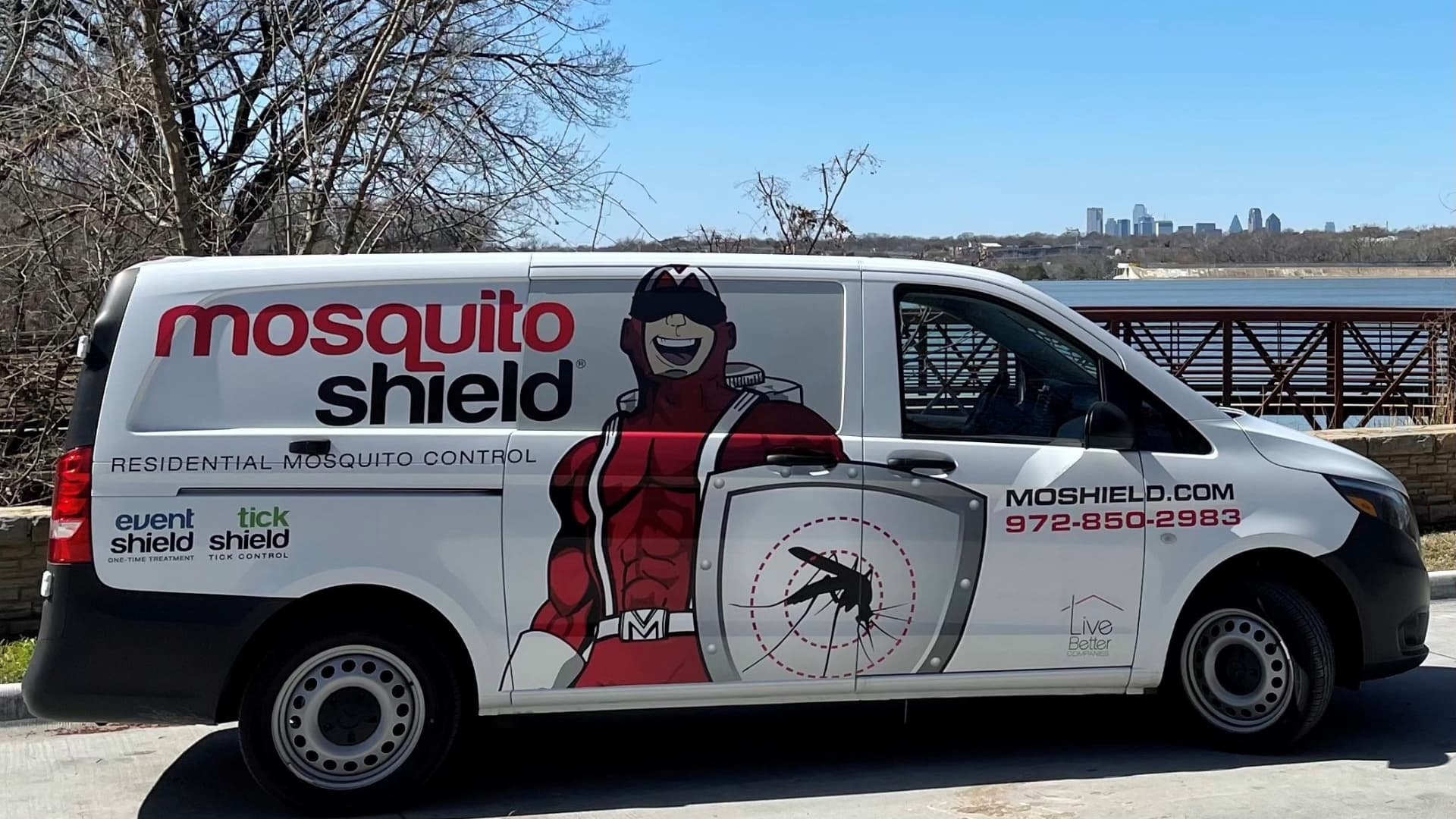
The business does not require a retail storefront. However, a home-based operation still needs franchisor-approved office and storage arrangements, suitable vehicles, and compliance with applicable licensing and local requirements.
How does the seasonal service model work?
Mosquito Shield’s model centers on recurring pest control services and approved additional treatments. The FDD describes the business as highly seasonal, with primary selling months generally running from April 1 through October 31, depending on the local climate. Demand is highest during summer.
For prospective owners, that creates several practical questions:
- Customer renewals: How much local effort is needed to retain existing households each season?
- Route planning: How much travel separates service appointments, and how does that affect staffing and vehicle needs?
- Additional services: Which approved treatments are available, and what equipment or training do they require?
- Cash planning: Which expenses continue outside the busiest selling and treatment months?
The franchisor arranges access to a National Sales Center for inbound customer calls. That support does not remove the owner’s responsibility for local operations, customer service, staffing, or required marketing expenditure.
What does a Mosquito Shield owner do?
An owner’s role depends on staffing and management arrangements. FBA’s members-site listing describes some owners performing treatments themselves, while others manage technicians, customer requests, local networking, and daily operations.
The FDD requires the business to be under the direct supervision of an owner-principal or an Operations Manager who has satisfactorily completed initial training during operating hours. It does not require every owner to personally perform treatments.
During the active season, responsibilities may include:
- Coordinating technicians and service routes.
- Managing customer questions and service concerns.
- Maintaining vehicles, equipment, and approved product supplies.
- Working with the franchisor and sales center.
- Monitoring local advertising and operating expenses.
- Maintaining required licenses, insurance, and records.
The FDD places the primary selling season from about April 1 through October 31, depending on the local climate, but the rest of the year still carries work and costs. The filing requires winterizing each vehicle’s spray-tank system, Item 19 reports customer prepayments collected in fall 2025 and from January through March 2026, ahead of the season, and several Item 6 fees, including bookkeeping and the Sales Center fee, are billed monthly. Ask current owners which duties and fixed costs continue through the winter.
A manager-led arrangement also is not the same as a passive investment. Ask current owners how much oversight they provide, what management costs they incur, and how staffing changes through the year.
How much does a Mosquito Shield franchise cost?
The estimated initial investment for one Mosquito Shield territory is $120,525 to $162,420, including the $54,500 initial franchise fee. The following table reproduces the main expenditure categories in the 2026 FDD’s investment estimate.
| Startup expenditure | Estimated amount |
|---|---|
| Initial franchise fee | $54,500 |
| Annual conference registration deposit | $1,000 |
| Customized vehicle allowance* | $2,100 to $20,470 |
| Lease and utility deposits | $0 to $1,500 |
| Storage-related expenses | $0 to $1,200 |
| Franchise Starter Package | $23,600 |
| Business management software | $250 |
| Initial local advertising expenditure | $35,000 to $50,000 |
| Training expenses | $1,500 to $2,700 |
| Insurance premiums | $675 to $900 |
| Professional fees | $350 to $1,200 |
| Licenses and permits | $50 to $100 |
| Additional funds (three months) | $1,500 to $5,000 |
| Total estimated initial investment | $120,525 to $162,420 |
Source: 2026 FDD, Item 7. These are estimates for one territory, subject to the assumptions and qualifications in the disclosure.
For the most accurate and current information, review the latest Franchise Disclosure Document (FDD) for Mosquito Shield. The financial figures presented here are historical results from franchised businesses as disclosed in Item 7 and Item 19 of the 2026 FDD.
Important context: These figures reflect startup and early operating needs only. They do not indicate financial performance or outcomes.
Understand the vehicle assumption
The vehicle allowance is not necessarily the full cash purchase price of a customized vehicle. The FDD explains that the estimate reflects three months of vehicle financing payments or specified customization costs, depending on how the vehicle is obtained. Its notes estimate the full required vehicle with customization at approximately $59,800, subject to changes in pricing and specifications.
Ask the franchisor and your financing provider to show exactly how your vehicle arrangement changes the cash needed before opening and the payments due afterward.
Plan beyond the startup estimate
The FDD states that the investment estimates exclude owner salary, part-time employees, rent, utilities, and other operating expenses. It also cautions that additional cash may be needed during at least the first three to six months, sometimes longer.
Investment estimates and fee information describe startup costs and contractual obligations. They do not represent revenue, profit, owner compensation, or expected returns.
To explore your potential franchise budget, use FBA’s franchise financial calculator.
What are Mosquito Shield’s ongoing fees?
The main ongoing obligations include royalties, brand-fund contributions, local advertising, and operating-service charges. Importantly, the royalty includes a minimum-sales basis, and the ongoing local advertising requirement differs from launch spending.
| Ongoing obligation | Amount or basis |
|---|---|
| Royalty | 8% of actual gross sales or the applicable minimum gross-sales requirement, whichever is greater |
| Brand fund | 2% of gross sales |
| Local advertising after the first calendar year | Greater of $50,000 or 10% of gross sales annually |
| Sales Center | Currently $300 to $750 per month, based on location size; subject to increase |
| Required bookkeeping services | Currently $200 to $500 per month; subject to increase |
| Software, applications, and technology | Then-current rates established by vendors |
Source: 2026 FDD, Item 6. This is a selected summary, not a complete list of fees. Review the current disclosure and agreement for definitions, minimums, adjustments, and other charges.
For the most accurate and current information, review the latest Franchise Disclosure Document (FDD) for Mosquito Shield. The financial figures presented here are historical results from franchised businesses as disclosed in Item 7 and Item 19 of the 2026 FDD.
Why the minimum royalty basis matters
The royalty is not simply 8% of whatever sales the business achieves. The FDD allows the franchisor to collect the difference between royalties paid on actual sales and 8% of the applicable minimum gross-sales requirement over the relevant 12-month period.
Minimum sales requirements also affect territorial protection and can have consequences beyond additional royalty payments. Review their timing and application carefully before committing.
How launch advertising differs from later-year advertising
Item 7 estimates $35,000 to $50,000 for initial local advertising. Its notes describe a $35,000 minimum for a single territory with a six-month season, unless a lesser amount is approved in writing. Additional territories or longer seasons may require more marketing funds.
Beginning in the second calendar year of operation, franchisees must spend the greater of $50,000 or 10% of gross sales annually on local advertising, separate from the brand-fund contribution.
The disclosure’s opening-advertising sections describe additional spending and timing provisions, including possible postponement for certain late-season openings. Before building your launch budget, obtain a written explanation of:
- Total required spending during your first calendar year.
- When each expenditure must occur.
- Which expenses count toward the requirement.
- How requirements apply to multiple territories.
- Whether any adjustment or postponement applies to your opening date.
What do Mosquito Shield franchisees actually earn?
Mosquito Shield’s 2026 FDD reports 2025 gross sales for 66 franchisees with two or more full seasons of operation, combined across each owner’s territories. The median was $235,812.18 and the average $398,950.19, with owners holding 5.38 territories on average. Gross sales is revenue before every expense, so it is not profit or owner income.
Item 19 is the section of the FDD where a franchisor may make financial performance representations, its disclosures of how outlets performed. Mosquito Shield’s contains two: a franchisee gross sales presentation, set out below, and a separate table for one company-owned business.
The franchisee figures cover full-year 2025 gross sales for franchisees whose businesses had completed two or more full seasons of operation by December 31, 2025. The FDD excludes units that opened or closed during the year, 45 units it says did not operate in material compliance with their franchise agreements, and three units that did not report. Franchisees with several territories report one combined figure, so each result covers all of an owner’s territories: the 66 reporting owners held 5.38 territories on average (median 4, range 1 to 23). The FDD defines gross sales as all revenue from the business, less refunds, adjustments, discounts, credits and allowances. The figures are unaudited.
Across the 66 reporting owners, 2025 gross sales had a median of $235,812.18 and an average of $398,950.19. The average sits above the median: 20 owners (30%) exceeded it. The highest result was $2,732,473.11 and the lowest $49,388.54. The lowest-grossing quarter of owners averaged $101,342 across an average of 3.4 territories.
| Owner group (2025 gross sales) | Average | Lowest | Highest | Median | Average territories per owner | Average customers per owner |
|---|---|---|---|---|---|---|
| Top 25% (quartile 1) | $1,002,272 | $434,589 | $2,732,473 | $788,100 | 10.0 | 1,396 |
| Second 25% (quartile 2) | $342,703 | $264,217 | $430,388 | $350,373 | 4.0 | 456 |
| Third 25% (quartile 3) | $181,665 | $138,857 | $239,504 | $170,767 | 4.3 | 271 |
| Bottom 25% (quartile 4) | $101,342 | $49,389 | $129,597 | $100,946 | 3.4 | 173 |
| All 66 reporting franchisees | $398,950.19 | $49,388.54 | $2,732,473.11 | $235,812.18 | 5.38 | Not disclosed |
Source: 2026 FDD, Item 19, Table 1. Quartile 1 is the highest-grossing quarter of the 66 reporting franchisees. Each figure combines all of a franchisee’s territories; it is not a per-territory result. Average customers per owner is reported by the FDD as average customers per tier.
For the most accurate and current information, review the latest Franchise Disclosure Document (FDD) for Mosquito Shield. The financial figures presented here are historical results from franchised businesses as disclosed in Item 7 and Item 19 of the 2026 FDD.
The franchisor’s caution, as written in the FDD: “Some outlets have earned this amount. Your individual results may differ. There is no assurance that you’ll earn as much.”
Item 19 also includes one company-owned business: a southeast Pennsylvania franchise the franchisor acquired from its owners in early 2025, with more than five years of operating history and a larger area than a standard new territory. The FDD shows its 2025 income, costs and adjusted EBITDA (earnings before interest, taxes, depreciation and amortization), with royalties restated at the current 8% rate. This article does not reproduce that table, because it describes one established, larger-than-standard business now owned by the franchisor rather than a franchisee result. Read it, with its adjustments, in the FDD.
Item 19 also reports, for the same reporting group, customer counts, a retention rate, prepayments, new-customer sales by service, customer acquisition cost and customer lifetime value (Table 2), plus system-wide sales totals for 2023 to 2025. Those figures are not reproduced here; the FDD explains how each was calculated.
One point to raise with the franchisor: Item 19 describes 407 franchised territories at December 31, 2025, and opens by referring to outlets in operation on December 31, 2024, while Item 20 reports 384 franchised and 23 company-owned outlets at the end of 2025.
Before relying on any figure, establish:
- Which businesses or territories it covers.
- The reporting period.
- Whether the results combine multiple territories under one owner.
- Which businesses were excluded and why.
- Whether the measure is sales, an expense-adjusted result, or something else.
- Which expenses and adjustments are included.
Do not treat gross sales as profit, owner salary, or available cash. Likewise, results from a company-owned operation should not be presented as what a franchisee can expect to retain.
Review the full representation, its qualifications, and the supporting information with qualified advisors.
Read Item 7 for the investment, Item 19 for the full representations and their notes, and Item 20 with Exhibit C for the list of current and former franchisees. Then talk with owners whose markets and number of territories look like yours; their experience is what puts these figures in context.
How big is the Mosquito Shield system, and is it growing?
According to Item 20 of the 2026 FDD, Mosquito Shield ended 2025 with 384 franchised outlets and 23 company-owned outlets, for 407 outlets overall. Franchised outlets declined from 435 at the end of 2024.
The table below uses both years as reported in the same 2026 disclosure, rather than combining parsed summaries from different filings.
| Measure | 2024 | 2025 |
|---|---|---|
| Franchised outlets at start of year | 416 | 435 |
| Franchised outlets opened | 66 | 13 |
| Terminations | 46 | 38 |
| Outlets reacquired by franchisor | 0 | 23 |
| Ceased operations (other reasons) | 1 | 3 |
| Franchised outlets at year end | 435 | 384 |
| Company-owned outlets at year end | 0 | 23 |
| Total outlets at year end | 435 | 407 |
Source: 2026 FDD, Item 20. Counts represent reported outlets or territories, not necessarily individual owners; some franchisees hold multiple units.
What the trend means for a buyer
The franchised-outlet count fell by 51 during 2025, but that does not mean 51 outlets disappeared from the overall system. Twenty-three were reacquired by the franchisor and became company-owned. Including those outlets, the overall system declined from 435 to 407.
The franchised-outlet movement reconciles as follows:
435 beginning outlets + 13 openings − 38 terminations − 23 reacquisitions − 3 other cessations = 384 ending outlets.
The decline in openings and the reported terminations deserve attention. However, the counts alone do not establish why franchise relationships ended or what happened economically at each business.
Ask the franchisor about the terminations, the 23 reacquisitions, and the slowdown in openings. Then speak with current and former franchisees listed in the disclosure, including owners in markets with a similar season length.
What training and support does Mosquito Shield provide?
The FDD describes initial training as three to five days of management and technical instruction. It includes training for up to three people without an additional training charge, subject to the specified attendance requirements. Franchisees remain responsible for travel and living expenses.
Training may take place in North Attleboro, Massachusetts; Springville, Utah; another designated location; or through a live online format. The program includes classroom instruction and hands-on application training.
The franchisor’s disclosed assistance includes:
- Operating standards and access to the operations manual.
- Initial management and technical training.
- Access to required business-management and routing software.
- National Sales Center arrangements for inbound customer calls.
- Guidance on operating procedures, marketing, purchasing, and administration.
- On-site training or assistance at the franchisor’s discretion.
FBA’s members-site materials describe additional resources, including web training, technician training, franchisee calls, and an intranet. Confirm the current availability, frequency, cost, and contractual status of those resources during due diligence.
For a grounding in evaluating franchise documents, FBA’s free franchise education webinar and FranPath Live sessions provide additional educational resources.
Can you own more than one Mosquito Shield territory?
Yes. The FDD includes multi-territory pricing and provides for separate Areas of Primary Responsibility, or APRs, when multiple territories are purchased. It describes a typical territory as containing approximately 80,000 single-family homes, as determined by the franchisor.
Territorial protection is conditional. The franchisor reserves certain rights, and maintaining protection depends on meeting minimum gross-sales requirements. Failure to meet those requirements can lead to additional royalty obligations, a reduced or unprotected territory, or termination under the disclosed provisions.
Before purchasing multiple territories, ask:
- How do minimum sales and royalty requirements change?
- What additional launch advertising is required?
- How does ongoing advertising apply across territories?
- What staffing, vehicles, and management structure will be needed?
- What rights does the franchisor retain within or around the territory?
Do not assume that buying adjacent territories automatically produces an efficient route network. Review the actual territory map and operating plan.
Who is a Mosquito Shield franchise right for?
Mosquito Shield may appeal to someone comfortable managing a seasonal, vehicle-based service business with defined products, procedures, and staffing requirements.
It may be worth exploring if you:
- Prefer an established operating system to developing your own service model.
- Are comfortable managing technicians and customer service.
- Can plan cash needs across a seasonal operating cycle.
- Understand the launch advertising commitment and later-year minimums.
- Are prepared to manage licensing, approved products, vehicles, and storage.
- Want to evaluate a single-territory or multi-territory business.
An existing home-services owner should also review compatibility with the franchise agreement. The FDD restricts competing activities and describes conditions affecting existing lawn-care or landscaping operations; do not assume the franchise can simply be added to another business without approval.
It may be less suitable if you:
- Need consistent activity and revenue throughout the year.
- Want a hands-off investment without operational oversight.
- Are uncomfortable with minimum sales and royalty provisions.
- Do not want responsibility for pesticide application and storage requirements.
- Cannot accommodate substantial marketing expenditure and additional operating cash needs.
The Zorakle owner-fit assessment can help you examine your strengths and preferences. You can also talk with a franchise consultant about how this operating model compares with other options.
What should you ask before buying a Mosquito Shield franchise?
Focus your conversations on the obligations and system changes that most affect your proposed business:
- Outlet changes: What explains the 38 terminations and 23 franchisor reacquisitions reported for 2025?
- Openings: Why did reported openings decline from 66 in 2024 to 13 in 2025?
- Launch advertising: What is the full first-year spending requirement for your opening date and territory configuration?
- Ongoing advertising: How does the greater-of-$50,000-or-10% requirement apply across multiple territories?
- Minimum royalties: What happens if actual sales fall below the contractual minimum-sales basis?
- Investment assumptions: How do vehicle financing, staffing, storage, and personal living needs change your required cash?
- Financial representations: Which businesses and reporting periods are included, and what do the measures exclude?
- Territory protection: Which rights are conditional, and what rights does the franchisor retain?
- Local operations: What licenses are needed, how long do they take to obtain, and how long is the local treatment season?
- Owner experience: What do current and former owners say about support, workload, marketing, and seasonal cash management?
Read the full disclosure and agreement with a franchise attorney and financial advisor. Use owner interviews to test the operating assumptions behind your plan rather than relying on a system-wide summary.
Mosquito Shield franchise FAQ
How much does it cost to open a Mosquito Shield franchise?
The 2026 FDD estimates $120,525 to $162,420 for one territory, including a $54,500 initial franchise fee. The range uses specific vehicle and early-operating assumptions, so it should not be treated as a complete cash budget for every buyer.
What is the Mosquito Shield royalty?
The royalty is 8% of actual gross sales or the applicable minimum gross-sales requirement, whichever is greater. Franchisees also contribute 2% of gross sales to the brand fund and have separate local advertising obligations.
How much revenue do Mosquito Shield franchisees make?
Item 19 of the 2026 FDD reports 2025 gross sales for 66 franchisees with two or more full seasons, combined across each owner’s territories (5.38 on average). The median was $235,812.18 and the average $398,950.19; the lowest-grossing quarter averaged $101,342. Gross sales is revenue, not profit or owner income. Some outlets have earned this amount. Your individual results may differ. There is no assurance that you’ll earn as much.
Does the $50,000 advertising minimum apply in year one?
The FDD distinguishes launch advertising from later-year spending. Item 7 estimates $35,000 to $50,000 for initial local advertising. The greater-of-$50,000-or-10% annual requirement begins in the second calendar year of operation. Confirm the opening-date and territory-specific provisions before budgeting.
Can I run a Mosquito Shield franchise from home?
Yes, subject to franchisor approval and applicable requirements. The FDD permits a home-based operation, but you still need suitable office and storage arrangements, approved vehicles, and required licenses and permits.
Can a manager run the business?
The FDD permits direct supervision by an owner-principal or an Operations Manager who has satisfactorily completed initial training. A manager-led arrangement still requires staffing, oversight, and sufficient operating funds; it should not be confused with a passive investment.
Is Mosquito Shield growing or shrinking?
Item 20 reports that the overall system declined from 435 outlets at the end of 2024 to 407 at the end of 2025. The latter total includes 384 franchised outlets and 23 company-owned outlets. Ask about the reported terminations, reacquisitions, and reduced openings before drawing conclusions about the opportunity.
What does a Mosquito Shield owner do in winter?
Mosquito Shield’s FDD places the primary selling season from about April 1 through October 31, depending on climate. Outside it, the filing points to winterizing the vehicle’s spray-tank system and collecting customer prepayments for the next season, which Item 19 reports were taken in fall 2025 and from January through March 2026. Actual responsibilities depend on the market and operating arrangement. Buyers should ask local owners which expenses and management duties continue outside the busiest months.
Ready to take the next step?
Ready to take the next step? The Franchise Brokers Association connects aspiring owners with the guidance, tools, and franchise options they need to make a confident, informed decision. Whether you are still exploring or ready to move forward, explore franchise opportunities with the support of an experienced FBA consultant.