The Grounds Guys Franchise is a full-service grounds care and landscaping brand under Neighborly built around recurring exterior maintenance for residential, commercial, and municipal customers—plus add-on projects and seasonal services. If you’re researching the grounds guys (or the common typo the ground guys), this review is designed to help you answer two practical questions quickly:
- Does the investment and fee structure fit my budget?
- Does the day-to-day owner role fit how I want to work?
You’ll see references to key FDD sections (Items 5–7, 10–12, 11, 15, 17, 19, 20) because those are the core “truth sources” candidates use during due diligence.
Sponsorship + compliance note: This article is sponsored by The Grounds Guys and was created in partnership with the brand to provide accurate, compliance-safe information about its business model and franchise opportunity. Nothing in this article should be considered legal, financial, or tax advice. Prospective franchisees should always review the most recent Franchise Disclosure Document (FDD) with qualified advisors before making an investment decision.
Key facts at a glance: the Grounds Guys.
People searching the grounds guys franchise information are usually looking for context: “How established is the system?” and “What does the owner actually manage?”
The short version: the legacy grounds care business dates to the 1980s, franchising began around 2004 (confirm the exact timeline in Item 1), and the brand now operates within the Neighborly family.
Core facts candidates tend to use when comparing options:
- Neighborly affiliation: part of a home services brand family headquartered in Waco, Texas; operates across the U.S. and Canada.
- System size: 228 franchised units (as of 12/31/2024); no company-owned units.
- Service mix: recurring maintenance plus add-ons such as design/install work, irrigation, bed maintenance, debris removal, and snow/ice where applicable.
- Owner profile: executive-style owner leading multiple crews—focused on recruiting, customer relationships, route discipline, and operational management.
- Territory approach: population-based territories with fees tied to population and specific provisions for rural markets.
This context matters because the combination of recurring routes + multiple crews often determines whether the model feels “scalable” or “too operational” for a given owner.
Who owns The Grounds Guys franchise, and how did the brand get started?
The Grounds Guys has roots in a legacy grounds care business dating to the 1980s. The brand evolved from local grounds maintenance work into a more standardized service concept, then began franchising around 2004—building a repeatable model around recurring maintenance routes plus add-on services. Over time, it became part of the Neighborly family of home service brands.
That ownership context matters because it can influence how the system is supported—through shared resources like marketing guidance, technology platforms, and coaching—while the franchisee still owns local execution (hiring crews, building routes, managing quality, and growing customer relationships).
Practical diligence: Ask how support shows up in your territory (field visits vs remote coaching), what’s handled centrally vs locally, and how system updates (technology, marketing programs, required processes) typically roll out.
The Grounds Guys franchise cost.
If you’re researching the grounds guys franchise cost (or even the typo search “the ground guys franchise investment cost”), Item 7 is the right place to start for budget fit.
The total estimated initial investment to open a Grounds Guys Franchise ranges from $74,570 to $224,770, plus any additional franchise fee for territory above the base population.
What that investment range usually represents.
This estimate is intended to cover what a new owner typically needs to get into market and begin servicing customers, including:
- initial franchise fee and required software enrollment
- vehicle(s) and equipment sufficient to perform recurring work
- basic insurance and permitting
- early marketing to begin building route density
- working capital to carry payroll, fuel, marketing, and overhead through the early ramp
Startup Costs & Fees.
| Category | Low Estimate | High Estimate |
| Initial Franchise Fee | $35,000 | $35,000 |
| Software Fee | $1,920 | $1,920 |
| Vehicle | $7,000 | $82,000 |
| Equipment, Supplies & Inventory | $21,000 | $41,000 |
| Insurance | $1,200 | $3,000 |
| Advertising & Local Marketing | $550 | $15,000 |
| Training, Travel, Lodging & Food | $2,700 | $5,850 |
| Deposits, Permits & Licenses | $50 | $3,000 |
| Professional Fees | $150 | $2,000 |
| Real Estate | $0 | $6,000 |
| Additional Funds (3 months) | $5,000 | $30,000 |
| Total Estimated Initial Investment | $74,570 | $224,770 |
Cost wrap-up: what tends to push you toward the low end vs high end.
Most of the spread comes from three variables:
- Territory add-ons (population above the base)
- Fleet + equipment decisions (how many vehicles, new vs used, trailer setup, mower grade)
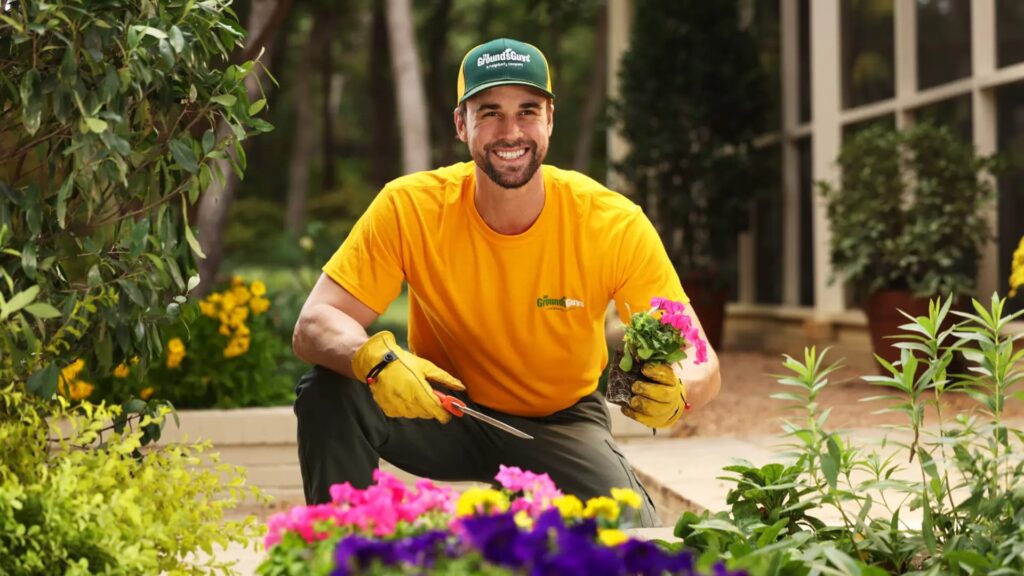
- Working capital assumptions (how conservative you are about payroll, fuel, marketing, and downtime)
The Grounds Guys franchise fee and ongoing costs.
Startup costs get you launched; ongoing fees and required programs shape the monthly reality. Candidates should model these early because they impact cash planning and operational discipline.
Ongoing Fees & Support (Items 5–6).
| Category | Low | High | Notes |
| Royalty (License) Fee | 5% | 6% | % of Gross Sales (excluding certain roll-in sales); minimums may apply |
| Brand/Marketing (MAP) Fund | 2% | 2% | National/brand fund contribution on Gross Sales (excluding certain roll-in sales) |
| Local Marketing Groups | 0% | 3% | Cooperative/local contributions; may count toward required local spend |
| Technology / Software (monthly) | $540 | $540+ | Base monthly fee plus per-user fees and optional add-ons |
| Call Center Program (monthly) | $199.99 | $199.99+ | Monthly + $15 per booked appointment; may adjust over time |
| Other Periodic Fees | — | — | Renewal, transfer, convention, audit, additional training, etc. (see Item 6) |
Plain-English definitions.
- Royalty / license fee: ongoing system fee paid as a percentage of sales
- MAP fund: brand-level marketing fund contribution
- Local marketing group: cooperative marketing contributions in some markets
- Technology fee: monthly access to required systems (plus per-user/add-ons depending on setup)
- Call center fee: a monthly program fee plus a per-appointment charge when appointments are booked
Ongoing fee wrap-up: what to validate (not just what to pay).
During due diligence, the most useful questions aren’t “Is 5% good or bad?”—they’re operational:
- What systems are required right now and what tends to change?
- How many users will you realistically need once you have multiple crews?
- How does call handling affect your scheduling and lead flow?
- What’s centrally supported vs your responsibility locally?
What tends to move the total investment up or down?
The Grounds Guys Franchise investment range typically shifts based on how you structure your launch and how large/complex the territory is.
Key drivers include:
- Territory population size: above 100,000 population can trigger additional franchise fee payments of $350 per 1,000 people (subject to maximums and rural pricing rules)
- Vehicle strategy: number of vehicles, new vs used, and branding decisions
- Equipment package choices: mower grade, trailer setup, specialty tools, and climate-driven needs
- Real estate approach: home-based + yard/parking vs leased office/yard facility
- Roll-in situations: potential fee discounts may exist for established businesses rolling into the system, but conversions can add transition costs
- Working capital assumptions: payroll, fuel, marketing buffers, and ramp speed
The cleanest way to avoid surprises is to identify your top 2–3 variables (usually territory size, vehicles/equipment, and working capital), then structure your validation calls around them.
Grounds Guys franchise information: how the business model works.
Many “review” pages list services but never explain how the model actually behaves. A Grounds Guys Franchise is typically built around recurring route work that creates repeat visits, with additional services layered in as customers and crews expand.
Common service categories in this concept.
Recurring service is often a core service type, and add-on services may expand what a customer requests over time:
- Recurring maintenance routes: weekly/biweekly/monthly service schedules.
- Enhancements and add-ons: bed work, mulch, cleanups, seasonal refreshes.
- Project-based work: design/install and larger jobs depending on team capability.
- Seasonal services: snow/ice in applicable climates, leaf removal, spring/fall cleanups.
- Commercial/municipal accounts: often involve longer-term service agreements and may add operational complexity (bidding, specs, scheduling, reporting).
Why route density matters.
Even without discussing performance, the logic is straightforward: in route-based service businesses, efficient routing tends to reduce wasted windshield time and improve crew utilization. That’s why many owners spend early months focused on:
- consistent scheduling windows.
- service area discipline.
- tight quality control to reduce callbacks.
- repeat customers that justify travel time.
Day-to-day operations: what owners typically do.
The Grounds Guys Franchise is commonly described as executive ownership, meaning the owner’s job is leadership and systems more than field labor. That doesn’t mean “hands-off,” especially early—it means your hands are on people, schedules, quality, and customers.
A typical owner week often includes:
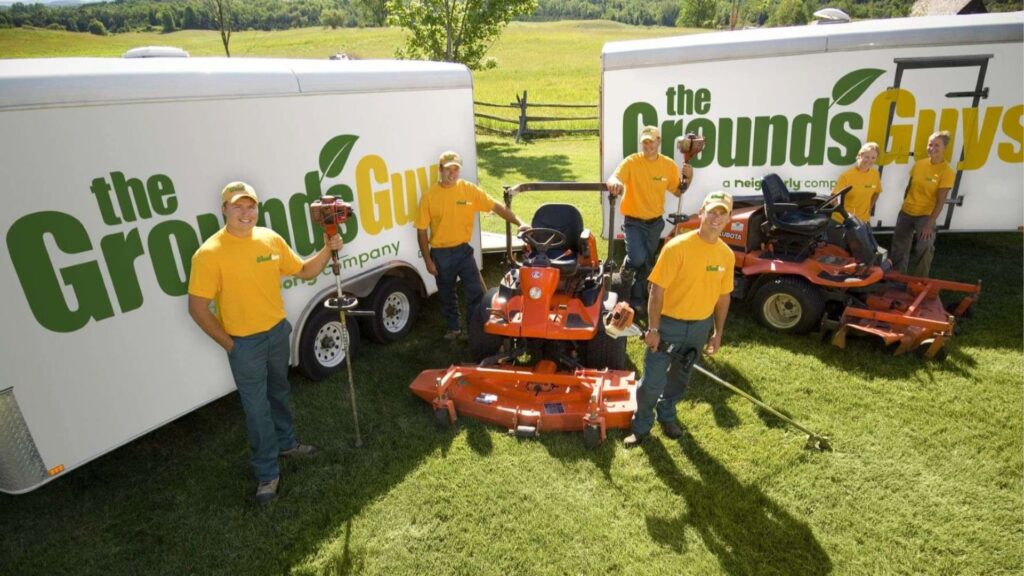
- Crew leadership: hiring, onboarding, morning huddles, safety, performance coaching.
- Scheduling and routing: dispatch discipline and route planning in required tools.
- Quality control: jobsite checks, standardization, service recovery.
- Sales and estimating: property walkthroughs, proposals, renewals, add-on conversations.
- Local marketing execution: digital campaigns, community networking, referrals.
- Admin and finance: KPI review, payroll approval, vendor payments, equipment readiness.
Owners often become more strategic over time (adding crews and delegating supervision), but early stages are usually leadership-heavy.
Staffing and hiring: the “make-or-break” area.
In grounds care, staffing is often the bottleneck. Even a great territory can stall if you can’t hire, retain, and train consistently.
A practical staffing lens for diligence:
- Crew structure: how many crews you need to service existing accounts and grow.
- Crew lead development: training expectations and accountability systems.
- Seasonality planning: peak season staffing vs off-season retention.
- Safety discipline: fewer incidents, fewer claims, fewer interruptions.
- Quality controls: fewer callbacks and better customer retention.
When you speak with franchisees, ask what they wish they knew about hiring in months 1–6—because that’s where the operational stress often lives.
Training, support, and technology.
The Grounds Guys Franchise is positioned to support owners who may not have deep landscaping backgrounds, with multi-week training and ongoing coaching described in the FDD and franchise materials.
Support & Systems Overview.
| Category | Included? | Notes |
| Initial training program | Yes | Sure Start often described as 4–6 weeks plus launch support; overall 6–8 week onboarding rhythm |
| On-site/field support | Yes | Business coaches/field support assist with launch and performance |
| Operations manual access | Yes | SOPs and brand standards via intranet; updated as needed |
| Technology platforms | Yes | Required software stack for scheduling/CRM/reporting; optional add-ons may apply |
| Marketing playbook | Yes | Local website, campaigns, scripts, collateral, and guidance |
Technology tends to matter because it becomes the backbone for:
- scheduling/routing
- quoting/estimating workflow
- KPI reporting and financial tracking
- customer feedback and service follow-up
- team communication and admin coordination
Fit check: If you dislike structured systems or daily tech usage, validate carefully—this model typically expects operational discipline.
Due diligence questions to confirm before you sign.
A strong diligence process turns marketing into operational clarity. Use these questions in franchisee calls:
- What’s the real timeline for onboarding and support in the first 6–12 months?
- Which tools are mandatory today, and what are the true monthly/per-user costs in practice?
- How often do you interact with a business coach, and what do those sessions actually cover?
- What marketing is centrally supported vs fully on you locally?
- How does cross-brand referral activity work in your area in real life?
- What training/certifications do crew leads typically complete?
- What were your biggest operational surprises in year one (hiring, seasonality, pricing, quality)?
Territories, real estate, and equipment requirements.
The Grounds Guys Franchise uses population-based territories and often has a lighter real estate footprint than storefront concepts, but equipment and vehicle readiness are central.
Territory basics.
- Typical territories are often described in the 100,000–500,000 population range (with exceptions).
- Rural options may apply for smaller non-metro territories (often referenced around 40,000–65,000 population), subject to criteria.
- Most systems include reserved rights (for example, certain account types or channels). Confirm how those apply in your area.
Real estate profile.
Many owners start with modest office/yard space or home-based operations, prioritizing vehicles, crews, and equipment over large storefront leases. The Item 7 real estate line item reflects that flexibility.
Equipment and vehicles (practical view).
Expect meaningful budget allocation toward:
- trucks and trailers (purchase or lease)
- commercial mowers/tools and safety equipment
- uniforms and brand-standard assets
- climate-driven gear (snow/ice in relevant markets)
- vendor approval compliance
Ideal owner fit and time commitment.
The ideal Grounds Guys Franchise owner is often described as an executive-minded leader and relationship builder who wants to manage teams and grow a scalable service business—often with a full-time commitment, especially early.
Strong-fit traits commonly emphasized:
- leadership and recruiting comfort
- relationship building with recurring customers
- operational discipline (routes, KPIs, quality control)
- business-owner mindset (building crews vs doing all work)
- comfort using technology daily
If you dislike staffing complexity or weather-driven variability, validate carefully during franchisee calls.
FAQ about the Grounds Guys Franchise.
What is the total initial investment for the Grounds Guys Franchise?
The estimated initial investment ranges from $74,570 to $224,770, plus any additional franchise fee for larger territories. Costs typically include the franchise fee, vehicles, equipment, marketing, insurance, professional fees, and three months of additional funds.
What is the grounds guys franchise fee and how does territory size affect it?
The minimum initial franchise fee is $35,000 for a territory up to 100,000 population, plus $350 per additional 1,000 people above that minimum. Rural pricing and discount programs may exist with eligibility rules.
Does The Grounds Guys offer financing?
Financing options or third-party lender references may be described in Item 10. Terms depend on qualification and should be confirmed directly and reviewed with qualified advisors.
Is there a protected territory?
Territories are typically defined in Item 12, including how boundaries are mapped and what rights the franchisor reserves. Confirm how national accounts and cross-territory work apply.
What training do new franchisees receive?
New owners participate in the Sure Start program (often described around 4–6 weeks) plus ongoing coaching/support, within an overall 6–8 week onboarding rhythm. Training usually covers operations, sales, marketing, technology, and field management.
Can I sell or transfer my franchise?
Transfers are typically permitted with franchisor approval under conditions and fees described in the agreement and FDD. The transfer fee is commonly described as the greater of $7,500 or 5% of the sale price (confirm current details in Items 6 and 17)
Is the Grounds Guys Franchise the right fit for you?
This section helps you decide whether to keep researching or move on—without relying on hype or financial promises.
The Grounds Guys Franchise can fit candidates who want a service-based operation with recurring route work, a multi-crew staffing model, and structured systems—especially if you’re comfortable leading teams, managing schedules, and building local relationships with residential, commercial, and municipal customers.
Often a fit if you:
- Like managing people, processes, and route discipline more than doing field work yourself.
- Are comfortable with hiring, training, and retaining crews (and holding quality standards).
- Can build local relationships (commercial accounts, property managers, HOAs, municipal contacts, referral partners).
- Prefer a defined system with required technology, coaching, and programs.
- Can plan for seasonality and run consistent scheduling across maintenance + add-on services.
Be cautious if you:
- I want a solo-operator model with minimal staffing.
- Prefer a low-structure business with few required systems or technology tools.
- Dislike seasonal demand swings or weather-driven scheduling variability.
- Haven’t budgeted realistically for vehicles, equipment, and early working capital described in Item 7.
- Don’t want to spend meaningful time on sales/estimating and customer relationship management.
If you’re still interested after this checklist, the next best move is to follow a simple, repeatable process to compare options without guesswork.