Mr. Handyman, a Neighborly company, is an executive‑run home repair and maintenance franchise where owners lead technician teams instead of doing the handyman work themselves.
Opening a location typically requires a total investment of about 143,150 to 179,600, including a 65,000 franchise fee, a 5,500 initial package fee, and an exclusive territory of roughly 40,000–60,000 households. With hundreds of territories across North America, the brand focuses on small‑to‑mid‑size repair and maintenance projects for busy homeowners and businesses, backed by Neighborly’s systems, marketing, and support.
This 2026 guide is designed for entrepreneurs and franchise candidates who want to understand the Mr. Handyman franchise cost, ownership role, training, territories, and due‑diligence steps. It summarizes key structural and operational points from publicly available materials and the Franchise Disclosure Document (FDD).
What this guide is not: This article does not provide projections, promises, or estimates of what you will earn as a Mr. Handyman franchisee. It is not a substitute for the current FDD or your own legal, financial, and tax advisors. Treat it as an educational starting point only.
This article was created in partnership with Mr. Handyman to provide accurate, reader-friendly information about its franchise opportunity. It is not legal, financial, or tax advice. Always review the most recent Franchise Disclosure Document with qualified advisors before making any investment decision.
Mr. Handyman franchise overview.
Before diving into costs, training, and operations, here is a quick‑reference snapshot of the key structural facts about the Mr. Handyman franchise system as it stands.
- Founded: 1996 (Chelmsford, Massachusetts); franchising since 2000.
- Headquarters: Waco, Texas, under Neighborly Assetco LLC.
- System size: About 350–370+ franchised units across North America (no company‑owned units).
- Business model: Mobile home‑repair and light commercial maintenance; executive ownership with technician employees.
- Owner profile snapshot: Leadership‑oriented, customer‑focused, comfortable hiring and managing a field team; no handyman experience required.
- Training highlight: 6–8 week Sure Start program plus about 8–10 days of classroom and field training and on‑site support around opening.
- Territory note: Exclusive territories typically include 40,000–60,000 target households, with a standard target of about 60,000.
These facts are a starting point for your research. The sections below go deeper into each area.
Who owns Mr. Handyman, and how did the brand get started?
Knowing who is behind a franchise brand and understanding its ownership history is an important part of evaluating long‑term system stability and strategic direction.
Mr. Handyman began in 1996 as an independent handyman concept and is now owned by Neighborly, a large multi‑brand home‑services franchisor backed by private‑equity firm KKR.
The company was founded in Chelmsford, Massachusetts, in June 1996 by David Lavalle under Mr. Handyman, Inc. Franchising began around 2000 after the concept was acquired by Service Brands International, a Michigan‑based franchisor.
In 2015, Neighborly (then The Dwyer Group), headquartered in Waco, Texas, acquired Service Brands International, bringing Mr. Handyman into a growing portfolio that includes Molly Maid, Aire Serv, Glass Doctor, and other home‑service brands.
Today, Mr. Handyman SPV LLC, headquartered in Waco, Texas, acts as the franchisor and operates as a wholly owned subsidiary within the Neighborly Assetco structure, backed by KKR.
For franchise candidates, this ownership context matters for several reasons. Neighborly’s scale provides access to shared vendor programs, cross‑brand referral networks, and centralized marketing infrastructure.
At the same time, private‑equity ownership means strategic priorities can shift over time. Candidates should review the current FDD carefully, including financial statements in Item 21, and consult with a franchise attorney to understand how the ownership structure could affect franchisee obligations and system direction over the life of a 10‑year agreement.
How much does it cost to open a Mr. Handyman franchise?
One of the first things franchise candidates want to know is what it costs to get started. This section breaks down the investment ranges as disclosed in the FDD. These are estimates only and do not represent what you will spend or what your outcome will be. Actual costs vary by market, individual choices, and timing.
Opening a Mr. Handyman franchise generally requires between 143,150 and 179,600 in total initial investment, including a 65,000 franchise fee, a 5,500 initial package fee, vehicles, equipment, marketing, and three months of working capital, as disclosed in the FDD.
Mr. Handyman – Startup costs & fees.
| Category | Low Estimate* | High Estimate* |
|---|---|---|
| Initial Franchise Fee* | 65,000 | 65,000 |
| Initial Package / Technology Fee* | 5,500 | 5,500 |
| Vehicle Expenses (first 3 months)* | 3,000 | 8,000 |
| Computer Hardware & Office Setup* | 3,500 | 6,000 |
| Real Estate & Utility Deposits* | 750 | 3,000 |
| Tools & Equipment for One Van* | 1,000 | 2,000 |
| Permits & Licenses* | 100 | 1,000 |
| Initial Equipment, Uniforms & Marketing* | 6,000 | 10,000 |
| Prepaid Insurance (first 3 months)* | 1,800 | 2,800 |
| Training Travel & Lodging* | 3,000 | 4,000 |
| Professional Fees* | 0 | 5,000 |
| Working Capital / Additional Funds (3 months)* | 54,000 | 74,000 |
| Total Estimated Initial Investment* | 143,150 | 179,600 |
Mr. Handyman Franchise Ongoing fees & support.
Beyond the initial investment, understanding ongoing fee obligations is essential for any franchise candidate building a realistic operating budget.
| Category | Low Estimate* | High Estimate* | Notes |
|---|---|---|---|
| Royalty (License) Fee* | 7% of gross sales | 7% of gross sales | Standard rate on most revenue; 3.5% on certain material and subcontractor revenue. |
| Brand / Marketing (MAP) Fund* | 2% of gross sales | 2% of gross sales | National/system marketing fund. |
| Minimum Local Marketing Spend* | 60,000 (Year 1) | 75,000+ / 8% of prior‑year sales | 60,000 Year 1; 75,000 Year 2; thereafter 8% of prior‑year gross sales. |
| Local Marketing Group (if applicable)* | 0% | 3% of gross sales | For optional or required co‑ops where available. |
| Technology / Software Fees* | Varies | Varies | Ongoing dispatch/CRM/email and related tech costs. |
| Other Periodic Fees* | Varies | Varies | Renewal, transfer, additional training, and other fees per Item 6. |
What tends to move the total investment up or down?
No two franchise launches cost exactly the same. This section identifies the key variables that tend to drive the total initial investment toward the lower or higher end of the disclosed range. None of these points imply any particular financial outcome.
Your total investment will vary based on vehicle choices, local real estate costs, and how you approach staffing and marketing in the first several months of operation.
- Vehicles: Purchasing new, fully wrapped vans costs more up front than leasing or sourcing used vehicles. Either approach may be workable depending on your market, cash position, and preference.
- Office space: Economical flex or small office space keeps occupancy costs manageable. Higher‑visibility or larger spaces push you toward the upper end of the range without necessarily generating more business.
- Staffing pace: Bringing on multiple technicians and office staff before your operational systems are fully settled increases payroll and working‑capital demands in the early months.
- Marketing intensity: Investing above the minimum required local marketing commitment uses more capital early. How that investment is structured and executed is a planning and operational decision, not a predictor of results.
- Professional services: Engaging a franchise attorney and a franchise‑savvy CPA adds to pre‑opening costs but may reduce the risk of structural or financial missteps down the road.
When building your budget, it is worth modeling a best‑case, base‑case, and conservative‑case scenario for each of these variables. Work with a qualified CPA to test whether your assumptions are realistic for your specific market before committing capital.
What is Mr. Handyman’s business model, and what does day‑to‑day operations look like?
Understanding the operational structure of a franchise before you invest is just as important as understanding the costs. This section describes what the Mr. Handyman model looks like in practice, how the owner role is defined, and what a typical workday involves. Nothing in this section should be read as a projection or guarantee of sales, income, or operational experience for any specific franchisee.
Mr. Handyman is a mobile, technician‑driven home‑repair franchise where the owner functions as a business leader and general manager. The owner is not expected to perform the handyman work directly.
Owners oversee a broad service menu covering residential and light‑commercial repair and maintenance work. Technicians handle the field work, and owners are responsible for managing the team, the schedule, the customer experience, and the local marketing effort.
The brand positions itself as a convenient option for homeowners and property managers who want to address multiple repair and maintenance items through a single, professional provider rather than coordinating several independent contractors. Marketing and call‑center services provided through Neighborly are intended to support lead generation and brand consistency. They are operational resources, not guarantees of any particular volume of leads, jobs, or sales.
Any evaluation of potential business performance must be grounded in the current FDD, Item 19 (if provided), your own market research, and the independent guidance of qualified legal and financial advisors, not on descriptions of the business model or positioning statements from any third party including this article.
What does a typical day look like for an owner‑operator?
To help candidates evaluate whether this ownership role fits their skills and preferences, here is a description of how a typical day might be structured. This is an operational overview only and does not represent a claim about workload, staffing levels, or business volume for any specific franchisee.
A typical Mr. Handyman owner’s day is focused on leading people, managing schedules, overseeing customer experience, and driving local marketing activity, not performing repair work.
A day might include:
- Morning huddle and dispatch: Reviewing the day’s schedule with technicians, confirming job details, and making sure vans are properly stocked and ready.
- Hiring and coaching: Recruiting qualified technicians, conducting interviews, onboarding new hires, and holding regular performance conversations to maintain service standards.
- Estimates and follow‑up: Reviewing incoming job requests from the Neighborly call center, website, and local marketing channels; preparing or approving estimates; and following up on open opportunities in a timely way.
- Customer experience management: Addressing escalations, monitoring online reviews, checking in with recurring clients, and ensuring that service quality meets brand standards.
- Local marketing and community networking: Building relationships with referral partners such as real‑estate agents and property managers, participating in community organizations, and overseeing digital marketing campaigns.
- Administrative and financial oversight: Monitoring operational KPIs, reviewing financials, approving payroll, managing cash flow, and evaluating the efficiency of marketing spend and technician productivity.
The owner role requires sustained, full‑time engagement, especially in the early years when team‑building, process refinement, and local brand‑building demand the most direct involvement.
What training, support, and technology does the franchisor provide?
Strong initial and ongoing support is one of the core value propositions of a franchise system. This section outlines what Mr. Handyman and Neighborly provide to help franchise owners get started and operate within the system’s standards. The presence of these resources does not guarantee any particular business outcome.
Mr. Handyman provides a structured multi‑phase training program called Sure Start, followed by classroom and field training, ongoing coaching from a dedicated Franchise Business Coach, and a technology stack covering scheduling, CRM, and performance tracking.
Support & systems overview
| Area | What’s provided (high level) |
|---|---|
| Initial training | 6–8 week Sure Start program, followed by about 8–10 days of classroom and field training plus on‑site launch support. |
| Ongoing coaching | Dedicated Franchise Business Coach/Consultant, field visits, regular calls, and performance reviews. |
| Operations resources | Manuals, SOPs, checklists, and an intranet with system standards and best practices. |
| Technology stack | Scheduling/dispatch software, CRM, financial dashboards, NPS/review tools, and Office 365 email. |
| Marketing support | National brand campaigns, website, local SEO, paid media guidance, and access to Neighborly’s ProTradeNet vendor network. |
Key elements of the support model in more detail:
- Sure Start (pre‑opening): A 6–8 week structured program where owners work with a franchisor consultant to complete entity setup, secure an office location and vehicles, recruit initial staff, and execute pre‑launch marketing activities before the business opens.
- Classroom and field training: Formal training at franchisor offices combined with in‑market time alongside an experienced franchise owner, covering operations, finance fundamentals, customer service standards, and marketing execution.
- Ongoing education and peer connection: Webinars, scheduled conference calls, regional gatherings, and national conventions keep owners current on system updates, best practices, and operational tools throughout the life of the franchise.
- Dedicated business coaching: Each franchisee is assigned a Franchise Business Coach who provides structured check‑ins, field visits, and performance reviews on an ongoing basis. The frequency and depth of coaching typically evolves as the business matures.
- Vendor and purchasing programs: Through Neighborly’s ProTradeNet network, owners can access preferred pricing and rebate programs on vehicles, parts, supplies, tools, and insurance. The availability and terms of these programs are subject to change and should be confirmed in the current FDD.
What to clarify during due diligence on training and support:
Before signing any agreement, candidates should ask specific questions about what training and support looks like in practice, not just on paper. Consider asking:
- How is the Sure Start timeline structured, and what milestones must be completed before the business is permitted to open?
- What does a typical initial training class look like in terms of owner backgrounds, size, and format?
- How frequently does the Franchise Business Coach meet with owners in year one versus year two and beyond?
- Which technology tools are mandatory, what are the ongoing costs, and how is staff trained to use them?
- How does the marketing team support new owners specifically during the pre‑launch and early operating period?
Training and support are foundational to your transition into this system. Use the FDD, direct conversations with the franchisor, and calls with current and former franchisees to build a clear picture of what is provided and what remains your responsibility.
How do territories, real estate, and equipment requirements typically work?
The operational footprint of a Mr. Handyman franchise is intentionally lean. This section covers how territory protection works, what kind of physical space is typically required, and what equipment and vehicles are involved. None of this information should be read as a projection of costs or business performance for any individual franchisee.
In short: Mr. Handyman is a mobile, territory‑based franchise that typically operates from a modest office or flex space, with one or more branded service vans outfitted with tools and equipment.
What real estate profile is typical?
Most Mr. Handyman franchisees operate from small, affordable office or flex space rather than high‑visibility retail storefronts, which helps keep fixed occupancy costs manageable.
Typical locations include light industrial units, flex spaces, or modest office suites large enough to accommodate the owner, a dispatcher, and storage for tools and materials. Because the business is mobile and technician‑driven, the physical location does not need to attract walk‑in customer traffic or require elaborate build‑outs or signage. This is an operational characteristic of the model, not a statement about costs or savings for any specific franchisee.
How does territory protection work?
Each Mr. Handyman franchisee is granted an exclusive territory defined by approximately 40,000–60,000 target households that meet the franchisor’s demographic criteria.
A typical territory includes around 60,000 target households, with a minimum of 40,000 and a maximum of 60,000. While franchisees remain in compliance with their franchise agreement, the franchisor does not grant another Mr. Handyman franchisee the right to market within that exclusive territory. Territory protection is a structural feature of the agreement and should be reviewed carefully in Items 12 and 1 of the current FDD, as terms and conditions may evolve. Some owners later pursue adjacent territories, subject to availability and franchisor approval, as part of a multi‑van growth strategy.
What equipment or vehicles are commonly required?
The business typically launches with at least one branded service van fully outfitted with tools, ladders, and safety gear, and grows the fleet as the team expands.
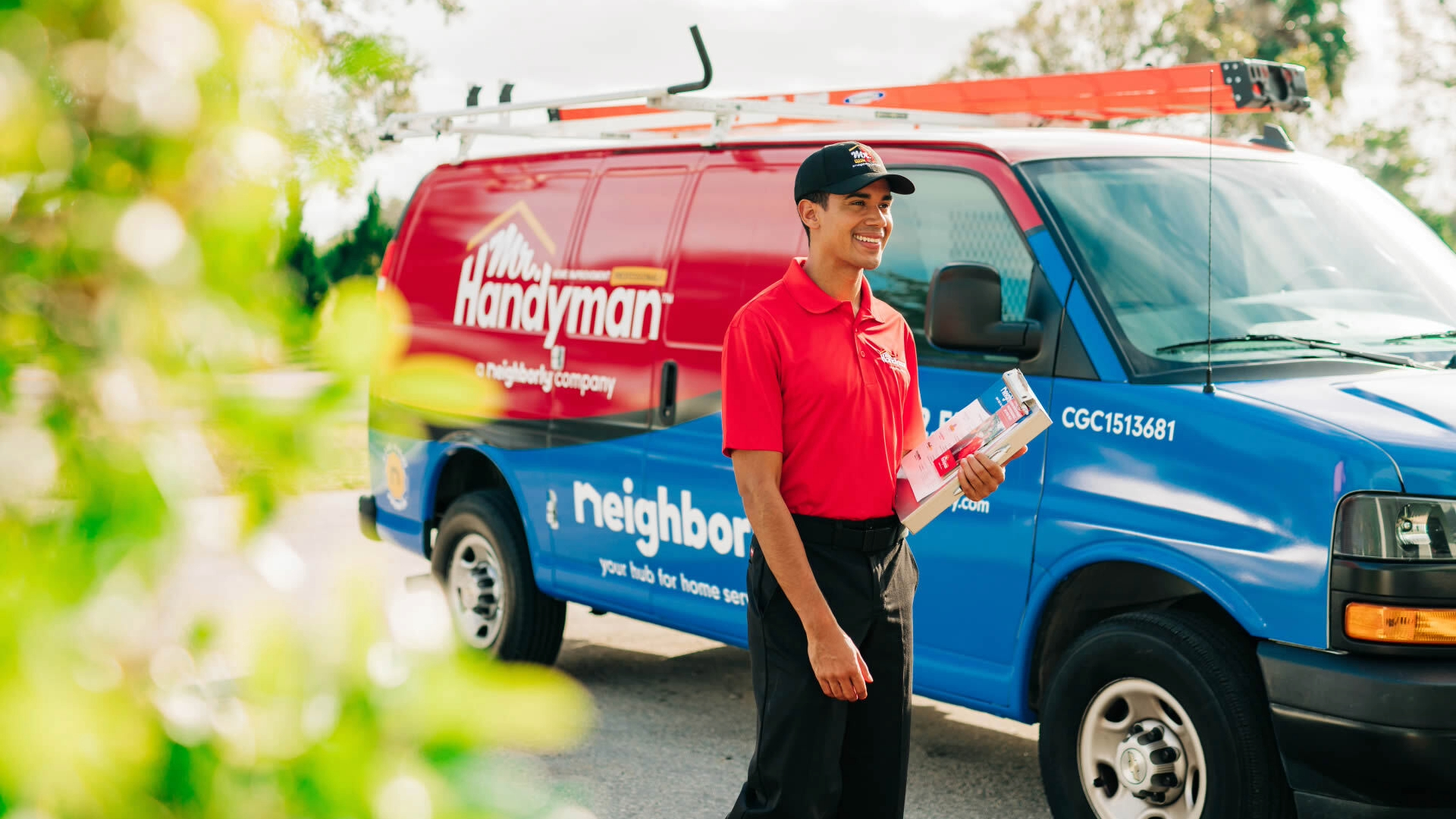
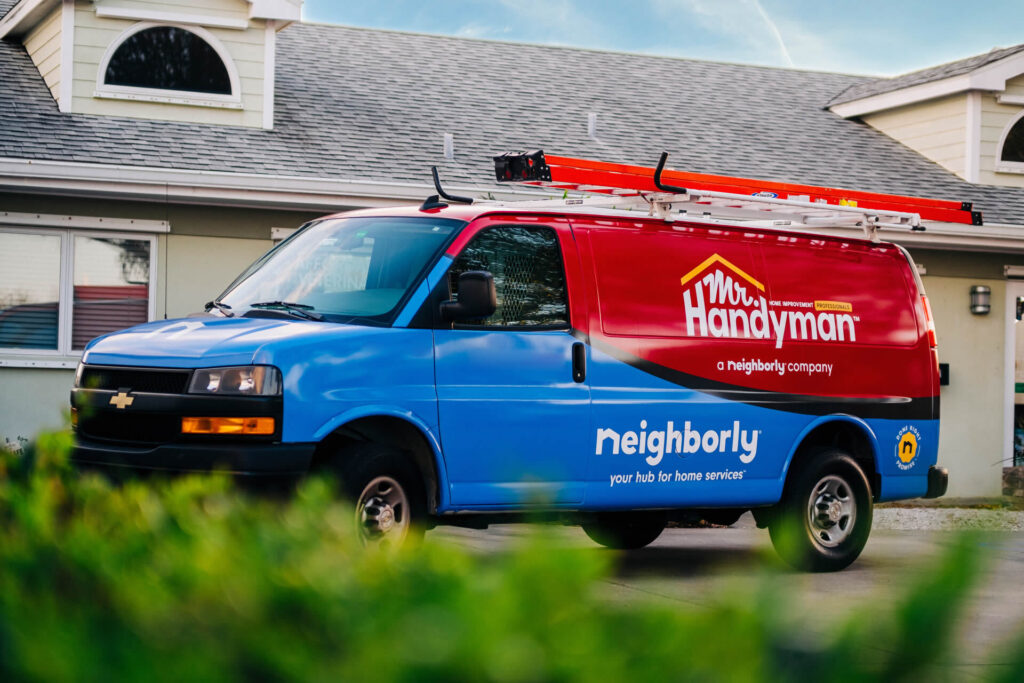
Vans are wrapped with Mr. Handyman branding and fitted with shelving and storage systems for tools and materials. Technicians typically use standard carpentry, drywall, plumbing‑repair, and general maintenance tools, many of which can be sourced through preferred vendor programs at negotiated pricing. Office equipment includes computers, phones, printers, and software for scheduling, customer management, and accounting. Specific equipment requirements should be confirmed in the current FDD and through direct conversations with the franchisor’s operations team.
Understanding the territory, real estate, and equipment requirements is important for planning your pre‑opening timeline and capital allocation. Once you have a clear picture of these structural elements, the next step is to understand who typically owns and operates this franchise successfully.
Who is the ideal Mr. Handyman owner, and what time commitment is typical?
Every franchise system has a profile of the owner who tends to fit the model well. This section describes the mindset, background, and commitment level that align with the Mr. Handyman executive ownership structure. It is not a prediction of success or a guarantee of any particular outcome for owners who match this profile.
The ideal Mr. Handyman owner is an executive‑minded leader who wants to manage people, processes, and a local service brand full‑time, not a part‑time investor or someone who wants to do the physical work themselves.
Owners who tend to align well with this model often:
- Are comfortable recruiting, hiring, and managing field technicians, including setting performance expectations and holding staff accountable for service quality and safety.
- Enjoy building long‑term relationships with homeowners, property managers, and local referral partners, and are comfortable handling escalations professionally and calmly.
- Are prepared to follow Neighborly’s operational playbook, adopt the required technology stack, and manage the business using KPIs and structured financial reviews rather than intuition alone.
- Feel confident with community outreach, consultative conversations about repair solutions, and the business development side of ownership.
- Take a disciplined approach to process, scheduling, safety compliance, and cash‑flow management from day one.
- Are mentally prepared for a learning curve in hiring tradespeople, even if they have led teams in other industries.
- Understand that early months often require long hours, direct personal involvement in many areas of the business, and a willingness to refine systems before the team is fully in place.
Most franchisees treat Mr. Handyman as a full‑time role, especially during the first several years when hiring, local marketing, and culture‑building demand direct daily involvement. Semi‑absentee or investor‑only models may be possible with a strong, experienced general manager in place, but they are not the default structure promoted in the FDD or public materials, and candidates interested in that path should discuss it directly with the franchisor and with a franchise attorney before proceeding.
How does Mr. Handyman compare to similar franchise options?
Compared with other home‑services franchises, Mr. Handyman offers a broad service mix, an executive ownership model, and deep Neighborly infrastructure, but it also requires comfort with hiring and managing tradespeople and overseeing route‑based field operations.
Qualitative comparison points:
- Service breadth: Mr. Handyman covers a wide variety of residential and light‑commercial repair and maintenance tasks. Brands like Mr. Appliance or Glass Doctor are narrower in scope, focusing on specific trade categories. A broader service menu means more complexity in technician hiring and job management.
- Ownership model: Like most Neighborly brands, Mr. Handyman is structured for executive ownership with employed technicians. It is not designed for owners who want to perform the work themselves. Candidates who prefer a hands‑on trade role should evaluate brands with a different ownership structure.
- Operational complexity: Managing a varied service menu across multiple technicians and job types requires strong organizational and people‑management skills. More specialized concepts may require a narrower skill set on the owner side.
- Territory structure: Household‑based exclusive territories of roughly 40,000–60,000 target homes are broadly comparable to many home‑service franchise models and are designed to support a multi‑van growth path over time, subject to franchisee compliance and franchisor approval.
- Cross‑brand network: As part of Neighborly’s multi‑brand portfolio, Mr. Handyman franchisees may benefit from cross‑brand referral relationships with sister brands serving the same homeowner and property‑manager base. This is a structural characteristic of the network, not a guarantee of any specific referral volume or business activity.
How should you research and validate the Mr. Handyman franchise?
A sound validation plan includes careful FDD review, direct conversations with multiple current and former franchisees, conservative financial modeling with a qualified CPA, and comparison with at least two other franchise options.
A practical validation plan:
- Study the FDD thoroughly. Focus on Items 5–7 (fees and total investment), Item 11 (training and support), Item 12 (territory rights and restrictions), Item 19 (financial performance representations, if provided), and Item 21 (audited financial statements of the franchisor). Work through the FDD with a qualified franchise attorney, not just on your own.
- Understand Item 19 carefully. If the franchisor provides an Item 19 financial performance representation, use it as one structured data point, not a prediction. Examine the number of locations included, the time period covered, how many units fell above and below any averages shown, and how your planned market, capital position, and background compare to the outlets in the data set. If there is no Item 19, be especially cautious about relying on anecdotal figures from any source outside the FDD.
- Validate directly with franchisees. Speak with multiple current and former franchisees about ramp‑up timelines, the quality and consistency of franchisor support, hiring and retention challenges, marketing effectiveness, and any surprises they encountered. Do not assume that their experience, positive or negative, will mirror yours.
- Build conservative financial projections. Work with a franchise‑savvy CPA to stress‑test your model using realistic local assumptions for labor costs, marketing spend, and operating overhead. Ensure you are adequately capitalized to handle the higher end of the investment range plus unexpected expenses.
- Compare at least two other options. Evaluate Mr. Handyman alongside at least two other home‑services franchise concepts to understand which model best fits your background, risk tolerance, and long‑term goals.
- Be honest about your objectives. Clarify your income requirements, preferred time commitment, and planned exit horizon before you proceed. Then evaluate honestly whether this model, at this investment level, in your specific market, is a realistic fit for your situation.
FAQ about the Mr. Handyman franchise.
How much does a Mr. Handyman franchise cost?
The total initial investment range is 143,150 to 179,600, including a 65,000 franchise fee and a 5,500 initial package fee, plus vehicles, tools, office setup, insurance, marketing, and approximately three months of working capital. Actual costs vary by market and individual choices. These figures are not a projection or guarantee of spending or financial outcome.
Do I need handyman or construction experience to own a Mr. Handyman franchise?
No. This is an executive ownership model. Franchisees manage a team of employed technicians rather than performing repairs themselves. Leadership, people‑management, and organizational skills matter far more than technical experience. Many owners come from corporate, military, sales, or operations backgrounds.
How big is a typical Mr. Handyman territory?
Territories are defined by approximately 40,000–60,000 target households meeting the franchisor’s demographic criteria, with a standard target of about 60,000. While franchisees remain in compliance, no competing Mr. Handyman franchisee is granted rights to market within that territory. Confirm all territory terms in Items 1 and 12 of the current FDD with a franchise attorney.
How long is the initial training, and where does it take place?
Training begins with a 6–8 week remote Sure Start program, followed by roughly 8–10 days of classroom and field training at franchisor offices and alongside an experienced franchisee, plus an on‑site support visit after opening. Completion of the full program is required before opening. Confirm specifics in Item 11 of the current FDD.
What ongoing support will I receive after opening?
Franchisees receive a dedicated Franchise Business Coach, access to operations manuals and a franchisor intranet, regular webinars, regional and national meetings, and marketing and technology support through Neighborly. Preferred vendor access is available through the ProTradeNet program. Validate the scope and quality of support directly with current franchisees during due diligence.
Does Mr. Handyman provide any earnings guarantees?
No. Mr. Handyman does not guarantee any level of revenue, profit, or business success. Any financial performance data in Item 19 of the FDD, if provided, reflects historical results for a specific set of reporting franchisees only and should not be interpreted as a projection or guarantee for any new location.
Can I own a Mr. Handyman franchise on a semi‑absentee basis?
The model is designed for full‑time executive ownership, especially in the early years. Semi‑absentee structures may be possible with a strong, experienced general manager in place but are not the default arrangement promoted in the FDD. Discuss this directly with the franchisor and a franchise attorney before proceeding.
What background do most Mr. Handyman franchise owners come from?
Owners come from a wide range of backgrounds including corporate management, military service, sales, and operations. No specific industry is required. What matters most is the ability to lead teams, manage processes, build local relationships, and operate with consistency and discipline.
Is Mr. Handyman the right fit for you?
Mr. Handyman may be a strong structural fit if you want to lead a team‑based, executive‑run home‑services business and are prepared for the full‑time commitment that role requires. It may not be the right fit if you dislike hiring and managing people, prefer working independently, or are looking for a lower‑involvement investment from the start.
You may be a stronger candidate if you:
- Prefer managing people, processes, and local marketing over performing the physical work yourself.
- Are prepared for full‑time, hands‑on involvement, particularly during the first two to three years.
- Enjoy building relationships with homeowners, property managers, and local referral partners.
- Are willing to follow Neighborly’s systems, use the required technology tools, and manage by KPIs.
- Have access to sufficient capital to fund the full investment range and ongoing marketing requirements.
You may want to proceed with caution if you:
- Prefer to work independently or have a low tolerance for hiring and managing field employees.
- Are seeking a part‑time or semi‑absentee structure from the outset without experienced management in place.
- Dislike sales conversations, community networking, or handling customer service issues directly.
- Are under‑capitalized or uncomfortable with the minimum local marketing commitments.
A final word on fit.
Fit is about whether your goals, work style, risk tolerance, and time horizon align with what this model actually requires. Test that alignment through honest self‑reflection, direct conversations with current and former franchisees, a thorough FDD review with qualified advisors, and comparison with other options on your shortlist.