Stand Strong Fencing Franchise is a home-services franchise focused on residential and commercial fence installation services. This review covers what the brand does, what the 2025 FDD says about startup costs and key fees, how the operating model works, what support is provided, and what kind of owner may fit the system best.
Stand Strong Fencing is a fencing installation franchise built around selling and coordinating residential and commercial fence projects, with support systems that include training, marketing, and technology. For buyers researching the Stand Strong Fencing Franchise, the main questions are cost, day-to-day operations, territory structure, and whether the owner role fits their background.
This article is sponsored by Stand Strong Fencing and was created in partnership with the Franchise Brokers Association (FBA) to provide accurate, compliance-safe information about its business model and franchise opportunity. Nothing in this article should be considered legal, financial, or tax advice. Prospective franchisees should always review the most recent Franchise Disclosure Document (FDD) with qualified advisors before making an investment decision.
Key facts at a glance.
If you want a fast snapshot before diving into the details, these are the points that usually shape first impressions and early diligence.
- Founded roots: Founder location is listed with a 2017 launch date; current franchisor entity is organized in 2023 (per the 2025 FDD).
- Headquarters: Omaha, Nebraska (per the 2025 FDD).
- System size: 126 franchised outlets at year-end 2024 (per Item 20 in the 2025 FDD).
- Business model: Service-based fencing installation for residential and commercial customers, run from an approved home office or commercial location depending on market logistics (per the 2025 FDD).
- Owner role: Franchisees provide estimates, schedule work, and manage employees and/or reputable subcontractors (per the 2025 FDD).
- Training highlight: Brand describes video training, web sessions, and an in-person course; the FDD outlines digital training plus in-person training in Omaha (per the 2025 FDD and brand materials).
- Territory note: A protected territory is granted; a standard first territory is tied to roughly 200,000 people, with important limits and exceptions in territory language.
- Network update: Stand Strong Fencing identifies itself as part of HOWIE, the consumer-facing platform associated with the HorsePower Brands family of home-service brands.
What does Stand Strong Fencing do?
This section answers the practical question buyers care about: what are you actually selling, and what kind of business are you operating?
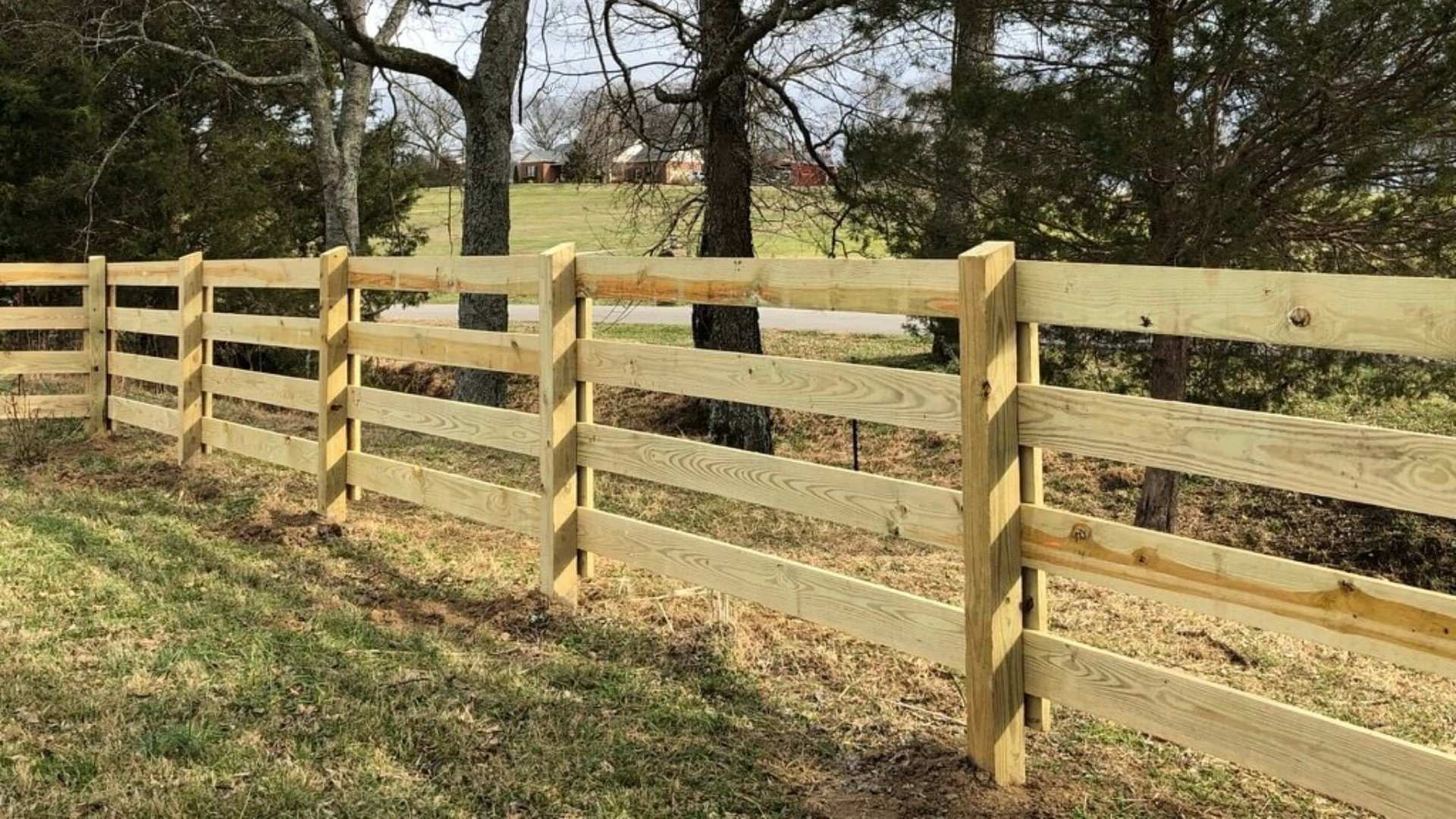
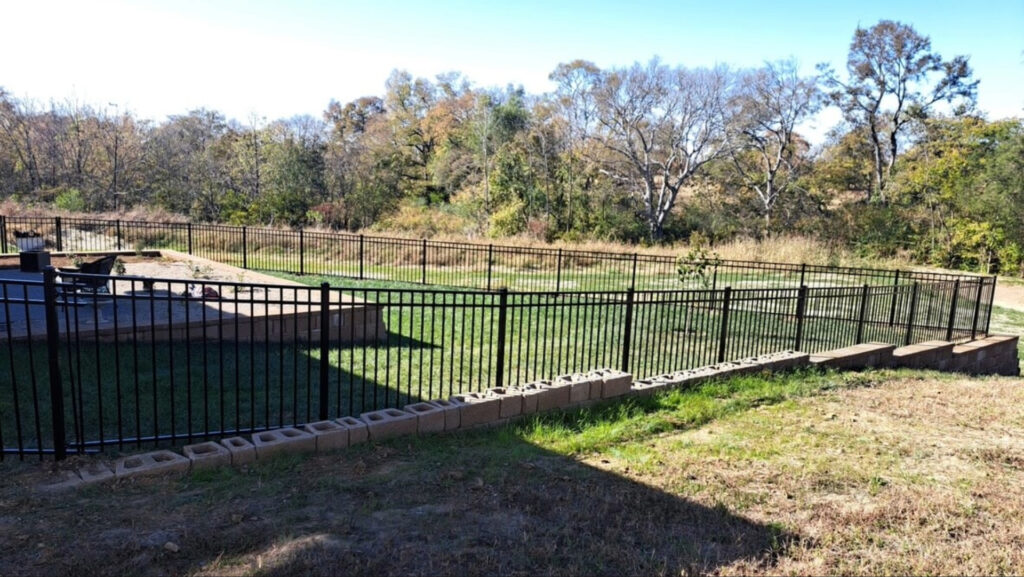
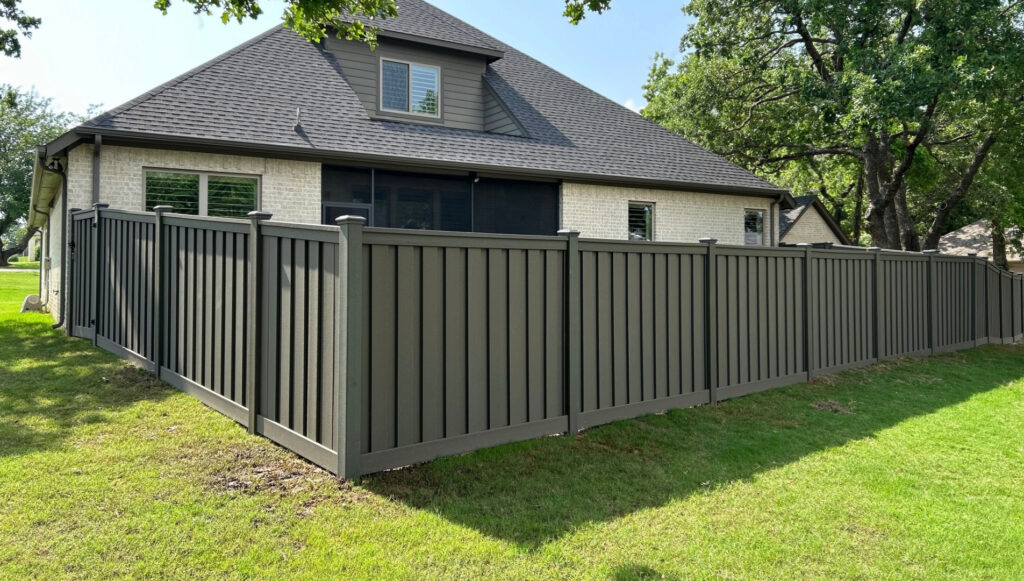
Stand Strong Fencing specializes in the sale and installation of wood, steel, aluminum, and vinyl fencing and related products for residential and commercial customers. The model is built around estimating, closing, scheduling, and coordinating installs—rather than being a trade-heavy “owner is the installer” concept.
The consumer-facing positioning emphasizes a dedicated call center, marketing support, built-in CRM tools, and a workmanship warranty. Those elements matter because they shape the owner’s day-to-day role toward lead handling, project oversight, and customer communication—while production is completed through employees and/or subcontractors.
Takeaway: If you like consultative selling and running a pipeline (leads → estimates → installs → quality control), this model can align with your strengths.
Who owns Stand Strong Fencing, and how did the brand get started?
Buyers often focus on numbers first, but ownership and origin help you understand how the model was built and how standardized the system may be.
The current franchisor is HPB Fencing LLC (formed in 2023), while the concept’s operating roots appear earlier through the predecessor business and the founder location referenced in the FDD. Stand Strong also presents itself as part of a broader multi-brand ecosystem and identifies itself as part of HOWIE, the consumer-facing platform connected to the HorsePower Brands family of brands.
Multi-brand platforms can influence marketing systems, technology requirements, and how consumer leads move across brands. During diligence, it’s worth confirming how that network affects lead routing and what is brand-specific versus shared.
How much does it cost to open a Stand Strong Fencing Franchise?
Most people looking up Stand Strong Fencing cost want a clear picture of startup investment before they go any deeper. The table below is the best “big picture” view because it reflects Item 7 of the 2025 FDD.
The 2025 FDD lists the estimated initial investment for one Stand Strong Fencing business at $160,181 to $241,071. That total reflects franchise fees, vehicles, marketing, software, training-related costs, and early operating funds.
Item 7 — Estimated Initial Investment.
| Type of Expenditure | Low | High |
| Initial Franchise Fee | $59,500 | $59,500 |
| Insurance (first 90 days) | $4,000 | $8,000 |
| Tuition Fee (training) | $4,995 | $4,995 |
| Travel & living expenses while training | $1,500 | $3,500 |
| Opening Package | $5,110 | $6,650 |
| Equipment Package | $0 | $2,400 |
| Rent & utilities (first 90 days) | $500 | $17,500 |
| Vehicles | $15,297 | $17,592 |
| Licenses, certificates & permits | $0 | $15,855 |
| Professional fees (legal/accounting, etc.) | $1,000 | $10,500 |
| Technology Fee (budgeted) | $570 | $570 |
| CRM Fee (budgeted) | $1,500 | $1,500 |
| Special Software Fee (budgeted) | $900 | $900 |
| Contact Center Fee (budgeted) | $1,200 | $3,500 |
| Dues & subscriptions | $0 | $1,500 |
| Leasehold improvements | $0 | $2,500 |
| Brand Marketing Fee | $15,500 | $15,500 |
| Initial marketing + local advertising (first 90 days) | $20,000 | $20,000 |
| Digital Management Fee (budgeted) | $1,500 | $1,500 |
| Accounting Services Fee (budgeted) | $2,109 | $2,109 |
| ZeePartnerships Fee | $5,000 | $5,000 |
| Additional funds (first 90 days) | $20,000 | $40,000 |
| Total Estimated Initial Investment | $160,181 | $241,071 |
Important context: These figures reflect startup and early operating needs only. They do not indicate financial performance or outcomes.
What to do with this table: Before comparing brands, map the “high” end to your comfort range and runway.
Stand Strong Fencing fee and key ongoing fees.
Fee schedules can get overwhelming. This section keeps it decision-useful by focusing on the fees that typically have the biggest impact on launch planning and monthly economics.
Key Fees.
| Fee | Amount | When it applies | Why it matters |
| Initial Franchise Fee (Item 5) | $59,500 | Due at signing | Core “buy-in” for first territory |
| Royalty (Item 6) | Tiered 6% → 2% (based on YTD gross revenue bands) | Monthly | One of the biggest ongoing economics drivers |
| Minimum Royalty (Item 6) | $500/month (begins after the 1-year anniversary) | Monthly | Monthly floor cost even in slower periods |
| Local Advertising Requirement (Item 6) | $20,000 in first 90 days; then greater of $2,000/month or 5% of monthly gross revenue collected | Ongoing | Required spend is meaningful; efficiency matters |
| Technology Fee (Item 6) | $190/month | Monthly | Required tech stack fee (subject to change per FDD) |
Performance note: If the FDD includes Item 19 financial performance information, review it directly with qualified advisors. Results vary widely by market, sales execution, subcontractor management, and marketing efficiency.
What tends to move the total up or down?
This is where the “same franchise” can feel easier or harder depending on your market. In fencing, logistics and material handling can drive more complexity than buyers expect.
The biggest cost swings often come from:
- Market logistics: Some markets can operate from a home office, while others may require a commercial yard.
- Material delivery: If local distributors will not deliver or allow pickup, added yard and equipment costs may apply.
- Vehicle package: The required sales truck is standard, but trailer needs can vary by market.
- Licensing rules: Contractor-related licenses, permits, and certifications vary by jurisdiction.
- Professional setup: Legal, accounting, and optional recruiting support can change pre-opening costs.
- Insurance pricing: Premiums depend on coverage, claims history, market, and carrier factors.
Treat logistics as a decision driver, not a footnote. It affects cost, speed, and daily operations.
What is Stand Strong Fencing’s business model, and what does day-to-day operations look like?
This is the core of what you’re really buying: a structured sales and coordination model supported by tools and systems.
Stand Strong Fencing is structured as a sales, estimating, scheduling, and project-coordination business rather than a pure field-labor model. Owners provide estimates, schedule work orders, and ensure installation is handled by employees and/or reputable subcontractors.
The core service set includes installation of wood, steel, aluminum, and vinyl fencing, plus repair and replacement services and other approved offerings. The customer base includes residential and commercial buyers.
The brand’s positioning also emphasizes centralized layers (call center, marketing support, CRM tools). Those systems influence how the owner spends time: lead response, estimate conversion, production coordination, and quality control.
If you prefer a business where the owner role is more “run the pipeline” than “do the labor,” this structure is a key selling point.
What does a typical day look like for an owner-operator?
This section helps you imagine the role beyond marketing language—what you’ll do repeatedly.
A typical day often includes:
- Lead response: reviewing inbound calls, web leads, and appointments routed through the system.
- Estimating: property visits, quotes, and explaining material options.
- Production coordination: scheduling employees/subcontractors and confirming materials.
- Quality control: checking install standards, handling issues, protecting customer experience.
- Local marketing: monitoring campaigns, community visibility, and referral relationships.
- Administrative rhythm: tracking jobs, software use, reporting, payroll/bookkeeping coordination, and vendor follow-up.
This role rewards organization, follow-up discipline, and the ability to manage vendors/people without losing process control.
What training, support, and technology does the franchisor provide?
Support is not just a “nice to have” in home services. It often determines how quickly a new owner becomes consistent with estimating, scheduling, marketing execution, and quality standards.
The support package combines structured onboarding, technology tools, brand marketing assets, and ongoing system oversight. The FDD and brand materials describe digital training, in-person training in Omaha, a call-center function, marketing support, and required software platforms.
Support and systems overview.
| Area | What is disclosed? |
| Initial training | Digital training phases plus in-person training in Omaha; tuition covers training, lodging, and certain meals. |
| Opening support | Pre-opening guidance, required opening package, operations materials, and onboarding steps. |
| Field / ongoing support | Ongoing guidance, system updates, annual conference, and additional/remedial training if needed. |
| Marketing guidance | Brand marketing assets, digital management, ad approval standards, and required local advertising. |
| Technology stack | Required technology fee, CRM, special software, contact-center support, and website/digital management. |
Confirm not only what support exists, but how it shows up week-by-week during launch.
What should you confirm during due diligence?
These questions help you verify how the system performs in real life—especially in your market.
- How long does each training phase take in practice?
- Which functions are handled by the contact center, and which stay local?
- What software is required on day one, and what can change later?
- How many people should attend initial training for your launch plan?
- What marketing materials are provided versus locally created?
- How quickly does the brand approve local advertising pieces?
- What support is available if subcontractor performance becomes inconsistent?
If answers are clear and specific, launch tends to feel more predictable. If answers are vague, expect more friction.
How do territories, real estate, and equipment requirements typically work?
Territory terms and material handling are often the difference between a clean home-office model and a more complex yard-based operation.
Real estate profile.
Some franchisees may operate from a home office, while others may need a leased commercial site with outdoor storage and truck access. The deciding factor is often how materials can be delivered or picked up in the market.
Territory protection.
Stand Strong Fencing grants a protected territory, but protected territory is not the same as blanket exclusivity. Territory terms, exceptions, and system carve-outs should be reviewed carefully with counsel.
Equipment and vehicles.
One wrapped sales truck is a standard requirement, and some markets may also require added handling equipment or a trailer. In tougher delivery environments, additional material-handling equipment may be needed.
Before you commit, confirm what your market realistically requires—because logistics can change your cost and your daily schedule.
Who is the ideal Stand Strong Fencing owner, and what time commitment is typical?
Owner fit is one of the most reliable predictors of satisfaction. This model tends to reward operators who like selling, coordinating projects, and holding teams/vendors accountable.
Stand Strong Fencing appears best suited to a hands-on operator who is comfortable with sales, people leadership, local networking, and process discipline. The model also expects management attention unless an approved designated manager is in place.
A strong fit often includes:
- Leadership: Comfort leading office staff, sales staff, installers, or subcontractor relationships.
- Systems follow-through: Willingness to use required software, reporting tools, and brand processes.
- Sales ability: Confidence handling estimates, objections, and local relationship-building.
- Community presence: Fit for owners who like local networking, referrals, and market visibility.
- Operational discipline: Ability to keep schedules, vendors, vehicles, and quality standards aligned.
How does Stand Strong Fencing compare to similar franchise options?
Comparisons are useful when they focus on operational reality, not hype. Stand Strong’s clearest differentiator is its combination of a fencing-specific offer with centralized support layers.
Key comparison points:
- Service mix: Focused on fencing installation and related services rather than a broad repair menu.
- Owner role: More sales-and-coordination driven than a trade-heavy self-perform concept.
- Labor structure: Allows work through employees and/or reputable subcontractors.
- Territory logic: Market density, delivery patterns, and yard needs may matter more than in lighter mobile models.
- Customer channels: Residential and commercial customers can change scheduling and estimating demands.
- Support layers: Call-center, digital management, brand marketing, and software requirements are more structured than independent contracting.
FAQ about the Stand Strong Fencing Franchise.
Does Stand Strong Fencing offer a protected territory?
Yes. The scope and limits should be reviewed carefully in the territory language and franchise agreement. Protected territory does not automatically mean full market exclusivity.
Can a Stand Strong Fencing Franchise be operated from home?
Sometimes. Some markets may work from a home office, while others require a leased commercial location due to material delivery, pickup, or storage needs.
What training does the franchisor provide?
Brand materials describe digital onboarding plus in-person instruction, and the FDD supports that with a formal training structure and tuition fee. Travel costs are separate from tuition.
How many outlets were in the system at the end of 2024?
The 2025 FDD reports 126 franchised outlets at the end of 2024. That figure is historical disclosure, not a live current count.
Does the FDD include Item 19?
If Item 19 financial performance information is provided, review it directly in the current FDD with a qualified advisor. Results vary by market and execution.
Is Stand Strong Fencing the right fit for you?
This decision is mostly about owner role fit and market logistics. The model can work well for people who like selling, coordinating projects, and managing quality with process discipline.
This brand may fit you if:
- You are comfortable selling, estimating, and building local relationships.
- You can manage people, vendors, or subcontractor quality without losing process control.
- You want a defined support structure around training, software, and marketing standards.
- You are prepared for required local advertising and recurring software/support fees.
- You can handle a home-office or light commercial model that may change by market logistics.
Use extra caution if:
- You want a fully passive model from day one.
- You dislike ongoing system rules, reporting, or required tools.
- You are not prepared for vehicle, logistics, and possible yard-storage complexity.
- You want a simple retail storefront model instead of field operations and job scheduling.
- You are not comfortable reviewing territory language carefully with legal counsel.