This Pool Duck Franchise Review examines a technology-driven pool service franchise designed for aspiring owners who want to manage a home-based business. Pool Duck combines recurring pool maintenance, equipment services, and repair-related work with training, proprietary technology, and defined franchise territories.
This review covers how the Pool Duck franchise operates, the franchisee’s daily role, training and support, territory structure, startup considerations, ongoing obligations, and practical due diligence questions. It is intended to help prospective franchisees decide whether the model fits their experience, management style, and ownership goals before reviewing the latest official franchise documents with qualified advisors.
This article is sponsored by Pool Duck and was created in partnership with the brand to provide accurate, compliance-safe information about its business model and franchise opportunity. Nothing in this article should be considered legal, financial, or tax advice.
Prospective franchisees should always review the most recent Franchise Disclosure Document (FDD) with qualified advisors before making an investment decision.
What Is the Pool Duck Franchise Business Model?
Pool Duck is a residential and commercial pool service franchise that focuses on weekly pool cleaning, water-quality management, equipment maintenance, and related repair services. The business is designed to operate from a home office or small office setting, with franchise owners managing technicians, schedules, customer relationships, and local business operations.
Pool Duck positions its model around recurring weekly customer service and additional equipment repair or installation work. A franchisee typically oversees the business instead of personally completing every pool route. That means the owner’s work often centers on staffing, customer service, route efficiency, marketing coordination, and operational planning.
The brand uses a proprietary technology platform for scheduling, customer communication, invoicing, route coordination, and reporting.
Pool Duck states that prior pool industry experience is not required. However, candidates should still be prepared to learn service standards, local licensing requirements, technician management, and the practical demands of running a field-service business.
What Services Does Pool Duck Provide?
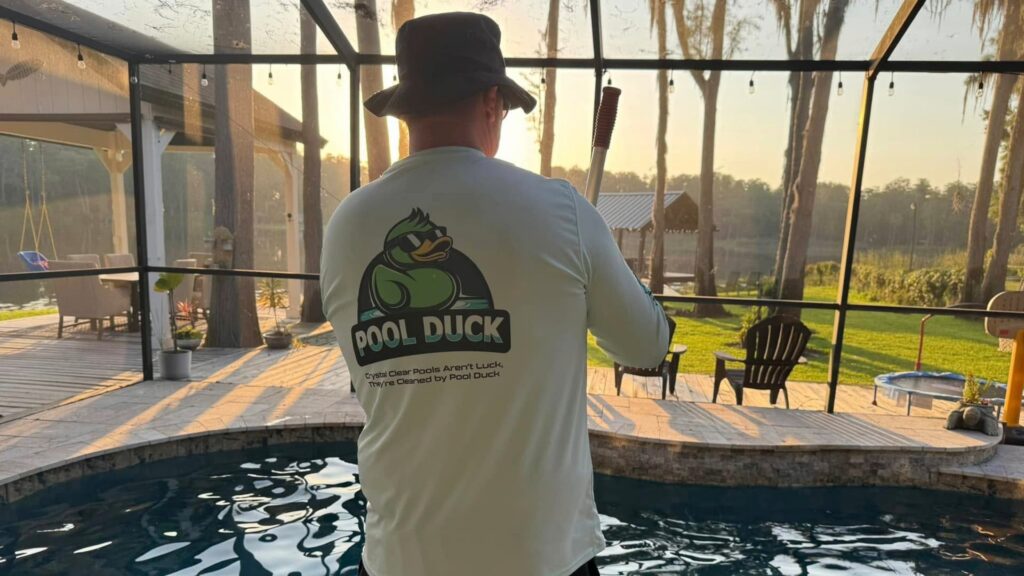
Pool Duck franchisees provide recurring pool service and maintenance for residential customers and may also serve commercial clients. Core services include pool cleaning, chemical balancing, water-quality management, equipment inspections, customer account management, and certain repair or installation work, subject to local licensing requirements.
A typical service route may include checking water chemistry, cleaning pool surfaces, inspecting equipment, documenting service activity, and communicating with homeowners. The owner does not need to perform every task personally. However, the franchisee remains responsible for staffing, service quality, customer concerns, and compliance with Pool Duck’s operating standards.
Current franchise materials describe the following approved service categories:
- Weekly residential pool maintenance and cleaning
- Commercial pool maintenance and cleaning
- Pool chemical balancing and water-quality management
- Pool equipment inspection and reporting
- Pool equipment repair, subject to licensing rules
- Pool equipment installation, subject to licensing rules
- Pool startup and acid wash services, where permitted
- Customer service and account management
This mix gives franchisees a broad service menu, but the exact work available in a market can depend on state and local rules. Candidates should ask the franchisor which licenses, permits, technician credentials, and insurance requirements apply in their intended territory.
How Much Does a Pool Duck Franchise Cost?
The estimated startup investment for a Pool Duck franchise ranges from $98,425 to $521,350. The largest variable is the optional purchase of an existing pool route or customer accounts, while the lower end assumes a home-based operation without that optional route purchase.
The initial franchise fee ranges from $35,000 to $50,000. Other startup categories include a vehicle, branded vehicle treatment, equipment, technology, initial marketing, inventory, insurance, training travel, professional fees, permits, and early operating funds.
| Startup Cost Category | Estimated Low* | Estimated High* |
|---|---|---|
| Initial franchise fee | $35,000* | $50,000* |
| Optional pool route purchase | $0* | $350,000* |
| Rent or real estate | $0* | $1,200* |
| Leasehold improvements | $0* | $4,000* |
| Market introduction program | $4,500* | $12,000* |
| Furniture, fixtures, and equipment | $1,000* | $4,000* |
| Computer systems | $1,000* | $3,600* |
| Insurance | $500* | $1,500* |
| Vehicle | $5,000* | $35,000* |
| Vehicle wrap or paint | $6,500* | $8,000* |
| Office expenses | $1,000* | $2,000* |
| Inventory | $3,000* | $6,000* |
| Licenses and permits | $425* | $1,550* |
| Dues and subscriptions | $1,500* | $2,000* |
| Professional fees | $1,000* | $3,000* |
| Training travel, lodging, and meals | $3,000* | $8,000* |
| Additional funds for early operations | $20,000* | $30,000* |
| Total estimated initial investment | $98,425* | $521,350* |
These figures reflect startup and early operating needs only. They do not indicate financial performance or outcomes.
Pool route purchases are optional. A candidate may decide to begin without purchasing an existing route, or may consider acquiring customer accounts from a third party where available. That choice can materially affect the amount of capital needed at launch.
What Ongoing Fees Does Pool Duck Charge?
Pool Duck franchisees have ongoing royalty, marketing, software, and other potential fees that are described in the current franchise documents. These fees should be reviewed carefully because they affect monthly cash-flow planning, administrative processes, and required technology use.
The royalty is the greater of 7% of gross sales or $600 per month. Franchisees must also spend at least 4% of gross sales each month on local marketing. Current documents also describe required software subscriptions and possible additional fees for training, transfers, compliance matters, or certain support needs.
| Ongoing Fee Category | Current Amount* | Timing |
|---|---|---|
| Royalty | Greater of 7% of gross sales or $600 per month* | Monthly |
| Local marketing requirement | 4% of gross sales* | Monthly |
| Marketing cooperative contribution | Currently none; may be up to 5% of gross sales* | Monthly if required |
| Software subscriptions | Approximately $312–$412 per month, plus certain per-technician costs* | Monthly |
| Additional or replacement training | $500 per day* | As needed |
| Transfer fee | $10,000 plus broker and other out-of-pocket costs* | Upon transfer |
| Non-compliance fee | $500 initially; potential additional weekly charges* | As applicable |
| Special support fee | Currently $600 per day plus expenses* | As applicable |
Candidates should ask direct questions about required vendors, payment methods, software costs, local marketing expectations, and how fees apply when more than one territory is owned. The franchisor may provide financial performance information in Item 19 of the FDD; consult the document with a qualified advisor.
What Does a Typical Pool Duck Franchisee Do Each Day?
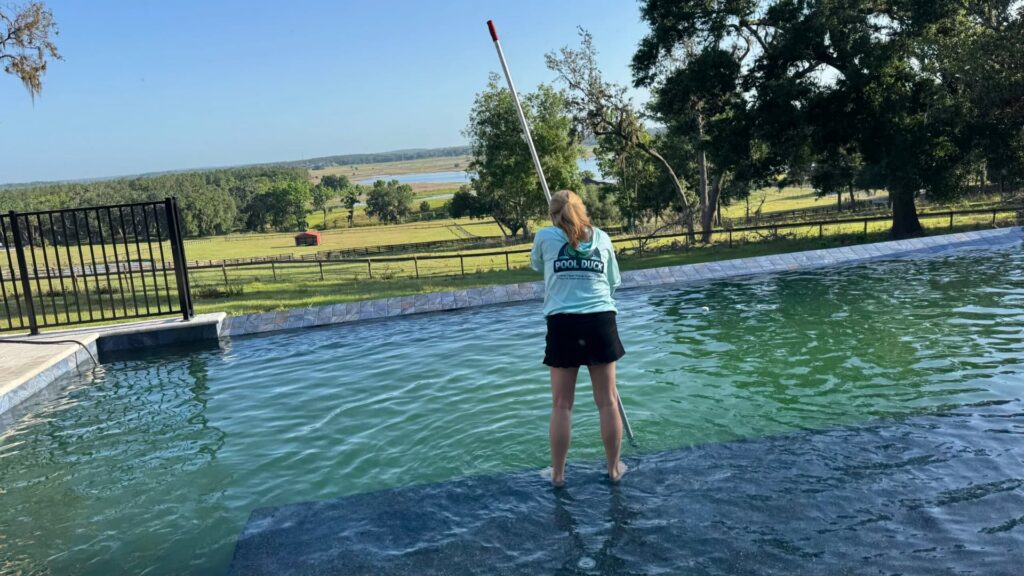
A Pool Duck franchise owner typically begins the day by reviewing service schedules, customer requests, route activity, technician performance, and operational priorities through the brand’s technology platform. The owner’s focus is usually business oversight rather than completing every cleaning visit personally.
Early-stage owners may spend more time coordinating technicians, resolving service issues, reviewing customer feedback, confirming inventory needs, and monitoring route completion. A practical example could include reviewing missed service alerts, responding to a homeowner’s equipment concern, assigning a technician to a new service request, and coordinating repair work that requires licensed support.
As the operation develops, the owner’s role can become more managerial. Daily responsibilities may then include:
- Hiring and onboarding technicians
- Reviewing service quality and customer feedback
- Monitoring schedules and route coverage
- Managing local marketing activity
- Coordinating inventory and vehicle needs
- Reviewing reports and operational metrics
- Building processes for staff accountability
This is a people-management and systems-management model. Candidates who prefer direct technical fieldwork may need to decide whether they want to remain hands-on or build toward a supervisor-led operation.
What Training and Support Does Pool Duck Provide?
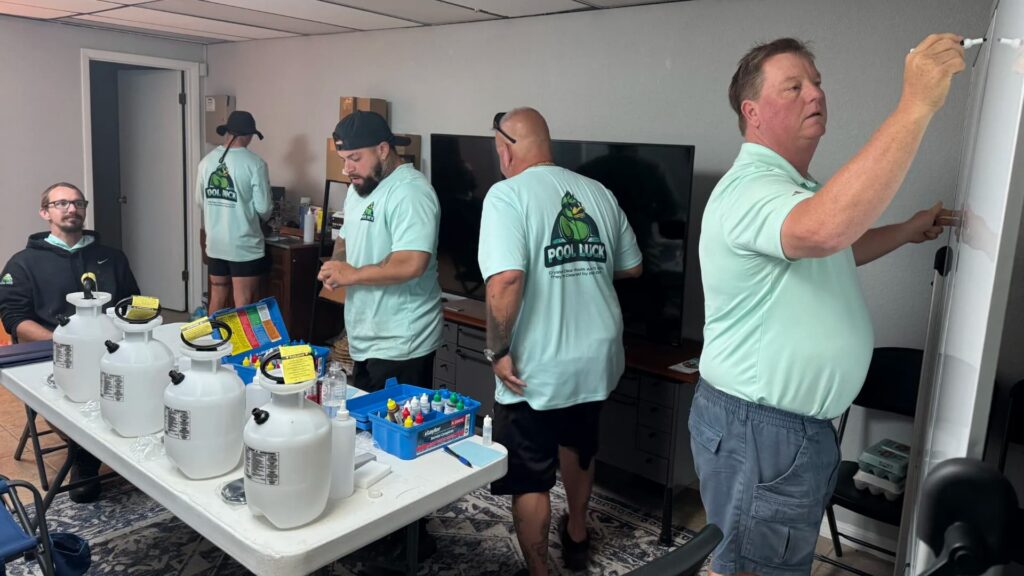
Pool Duck provides initial training, ongoing operational support, technology access, and business-development guidance for franchisees. The training structure combines classroom instruction with on-the-job learning and is intended to help new owners understand both pool service operations and the management side of the business.
Current brand materials describe an initial program of 570 total training hours. This includes 178 hours of classroom training and 392 hours of on-the-job training. Training may take place at headquarters, virtually, or at the franchisee’s location, depending on the module.
Training subjects include franchisee onboarding, employee-to-owner development, market launch preparation, and ongoing refresher sessions. The franchisor also provides a franchise operations manual, suggested staffing guidance, business-plan review, technology setup, and limited on-site opening support.
Pool Duck’s support model includes:
- Initial classroom and hands-on training
- Operations manuals and standardized procedures
- Scheduling, invoicing, and customer-management technology
- Hiring and employee training guidance
- Market-introduction planning support
- Website and Google Business Profile guidance
- Ongoing coaching and operational advice
- Annual and monthly training opportunities
- Branding assets and marketing materials
Candidates should confirm what training is mandatory, where it is held, which travel expenses are their responsibility, and whether a general manager must attend.
Does Pool Duck Require Pool Industry Experience?
Pool Duck does not require prior pool industry experience from franchisees. The brand trains owners on its operating procedures, service standards, technology systems, and business processes, making the opportunity accessible to candidates from corporate, sales, management, or other non-pool backgrounds.
Still, pool service involves technical work, safety practices, chemical handling, equipment knowledge, and local regulations. Franchisees should not mistake “no experience required” for “no learning required.” Owners must understand the systems well enough to hire, train, evaluate, and support their team.
Some jurisdictions require specific licenses or credentials for repair and equipment installation work. Until a franchisee obtains the required license, current official documents state that certain work may be completed through an affiliated repair provider. This should be a core due diligence question for any candidate evaluating a territory.
What Territory Does a Pool Duck Franchisee Receive?
Pool Duck provides a defined and exclusive territory for each franchise agreement. The territory is generally based on a population range of approximately 250,000 to 500,000 people in the relevant metropolitan area, or a 10-mile radius from a center location, whichever is smaller.
Territory exclusivity means the franchisor will not establish another company-owned or franchised Pool Duck location within the assigned area during the agreement term. However, exclusivity does not eliminate every form of competition. Candidates should review the territorial language closely to understand online leads, national accounts, repair-provider activity, and circumstances where the franchisor may service a customer in the territory.
A franchisee can generally operate from a home office, but the home office must be within the assigned territory. If a home address cannot meet Google Business Profile verification rules, the franchisee may need another verifiable address within the territory.
Pool Duck also offers qualified candidates an option to purchase up to three territories at the same closing. Multi-territory ownership requires separate agreements and added operating capacity. Candidates should ask whether the territory they want is available and how the brand defines the boundaries in writing.
Is Pool Duck a Home-Based Franchise?
Pool Duck is designed as a home-based franchise, although some owners may choose to lease space for inventory, chemicals, equipment, or administrative needs. Operating from home may reduce the need for a storefront, but it does not remove the need for vehicles, storage, staff oversight, insurance, and local business compliance.
The lower end of the startup range assumes a home-office operation. The higher end can reflect additional space, a new vehicle, optional route purchases, and other market-specific decisions. Candidates should check zoning, storage rules, home-association restrictions, and local chemical-handling requirements before assuming their home is suitable.
This model may fit an owner who wants to avoid retail site selection and lease negotiation. It may not fit someone who prefers a customer-facing storefront, a fixed walk-in location, or a highly passive ownership role.
Who Is the Ideal Pool Duck Franchise Owner?
The ideal Pool Duck franchisee is a coachable, organized owner who can lead people, follow documented systems, and manage a service operation. The model may suit career changers, managers, sales professionals, and aspiring entrepreneurs who value recurring customer relationships and technology-enabled field operations.
Pool Duck candidates should be comfortable with:
- Hiring and supervising technicians
- Learning pool service standards and local regulations
- Managing customer concerns
- Using dashboards and operating software
- Following a defined brand system
- Supporting local marketing efforts
- Making practical staffing and scheduling decisions
The business may be less suitable for a candidate who wants no involvement in personnel management or has little interest in customer service operations. The franchise agreement requires the principal executive to participate personally in direct business operations and devote substantial time and attention to the franchise.
How Does Pool Duck Compare With Other Home-Service Models?
Pool Duck differs from many home-service concepts because it centers on recurring pool maintenance, technician route management, and equipment-related service needs. The model does not require a retail storefront, but it does require local field teams, vehicles, customer scheduling, and careful compliance with pool-service rules.
Compared with an independent pool business, a Pool Duck franchise offers a defined brand system, structured training, technology tools, operating standards, and franchisor guidance. In exchange, franchisees follow brand requirements, use approved systems, pay recurring fees, and operate within the franchise agreement’s terms.
A useful comparison framework should focus on fit rather than labels like “better” or “worse.” Candidates should compare:
| Evaluation Area | Questions to Ask |
|---|---|
| Business model | Do I prefer recurring service routes, project-based work, or retail transactions? |
| Owner role | Am I ready to hire, supervise, and retain technicians? |
| Startup structure | Can I support the investment range without assuming unverified outcomes? |
| Territory | Is the available area practical for staffing, routes, and demand? |
| Training | Does the training match my current experience level? |
| Licensing | What certifications are needed in my state or county? |
| Technology | Am I comfortable operating through software dashboards and mobile systems? |
What Should Candidates Review Before Signing?
Pool Duck candidates should complete a thorough due diligence process before signing a franchise agreement. The most useful process combines document review, advisor input, direct questions for the franchisor, and conversations with current or former franchisees when available.
Start by reviewing the current official franchise documents with a franchise attorney and qualified financial advisor.
Important due diligence questions include:
- What licenses are required in my intended territory?
- What work must be completed through an affiliated provider?
- What does technician hiring look like in this market?
- Is a home office permitted under local rules?
- Which software tools are required, and what do they cost?
- What local marketing activities are expected?
- How are territory boundaries mapped?
- What training travel costs should I plan for?
- What are the renewal, transfer, and termination requirements?
- Can I speak with current franchisees about their daily operations?
The initial agreement term is 10 years. Qualified franchisees may have the option to renew for up to two additional five-year terms, subject to then-current requirements. Transfers require franchisor approval, and current franchise documents describe post-term non-compete obligations. These provisions deserve a detailed review with legal counsel.
Frequently Asked Questions About Pool Duck
How much does a Pool Duck franchise cost?
A Pool Duck franchise has an estimated initial investment range of $98,425 to $521,350. The range includes the initial franchise fee, vehicle, technology, inventory, marketing, permits, training-related travel, early operating funds, and an optional pool route purchase. Actual costs depend on territory choices, local requirements, and whether an owner buys existing customer accounts.
Do I need pool experience to own a Pool Duck franchise?
No, Pool Duck does not require prior pool industry experience from franchise owners. The brand provides training on its operating systems, pool-service procedures, technology, and management responsibilities. However, owners still need to learn local requirements, supervise technicians, and understand the service standards that shape customer experience.
Is Pool Duck a home-based franchise?
Yes, Pool Duck is designed as a home-based pool service franchise. Owners may operate from a home office or choose to use a small office or storage space. The operating setup must meet local zoning, licensing, storage, and Google Business Profile requirements.
What are Pool Duck’s ongoing franchise fees?
Pool Duck’s ongoing fees include a royalty equal to the greater of 7% of gross sales or $600 per month. Franchisees must also spend at least 4% of gross sales on local marketing. Software subscriptions, training fees, transfer fees, and other charges may apply under specific circumstances.
What territory does Pool Duck provide?
Pool Duck provides an exclusive territory based on an approximate population of 250,000 to 500,000 people in the relevant metropolitan area, or a 10-mile radius from a central location, whichever is smaller. The final territory boundaries are defined in the franchise agreement and should be reviewed before signing.
What is the Pool Duck franchise agreement term?
The initial Pool Duck franchise agreement term is 10 years. Franchisees who meet the brand’s then-current renewal requirements may have the option to renew for up to two additional five-year terms. Candidates should review all renewal, transfer, and termination provisions with a franchise attorney.
Is Pool Duck the Right Franchise for You?
Pool Duck may fit an aspiring owner who wants a structured, technology-supported pool service business and is ready to manage people, routes, customer relationships, and local operating requirements. It may be especially relevant for candidates who prefer a home-based structure and recurring service work over retail operations.
The right decision depends on more than startup cost. A candidate should assess personal involvement, local licensing, staffing needs, territory availability, technology comfort, and the terms of the franchise agreement.